
















































































































































Control Your Content - Level 2
 |
How to talk to SuppliersIf you are considering using any kind of software, system, or service to help you preserve and provide access to your digital collections, you need to make sure that you know what you need. Being able to talk to suppliers or creators will allow you to ask the right questions to make sure you get the most out of each conversation and ensure you get the product that is right for you, regardless of whether the software is free to use or paid for. |
The approach we recommend here is to take a holistic view of how you would like to manage your collections and what technological solution would enable you to do that. Considering the points below will help you to do this.
These points are broken down by the stages of the lifecycle to help you work through each step of your process and work out what is required.
Creation / Collection
|
Selection –
|
Description
|
Management –
|
Storage –
|
Preservation –
|
Use –
|
|
| Knowing what you need, what is a deal breaker and what are “nice to haves” will help your conversations with suppliers go smoothly and ensure you choose the right product for you.
Make sure you follow the advice in level one and don’t put your content anywhere that you don’t fully understand how you will get it back if you need to. |
 |
Control Your Content - Level 3
|
Check Your ContractsIf you decide to use a commercial software or hardware provider for any aspect of your digital preservation work, it is very likely that you will need to sign a contract to agree to the company’s terms of service. It is important that you understand what you are signing and know exactly what will happen to your content once it is stored or processed by an external provider. |
Knowing how your data will be processed by the company is important as small print could be included within contracts that allows them to sell your contact information, or in some cases, use your content for something you don’t want it to be used for. If you are unsure, ask for help from your local or national archive who can offer advice and explain the jargon used to help to understand exactly what is being signed.
| If you sign a contract and realise it’s not what you initially thought you were signing, it can be difficult and costly to break, with some companies even charging early exit fees. Taking the time before you sign to understand all the clauses clearly will greatly reduce the risk of issues arising in the future. | |
Make Copies - Level 1
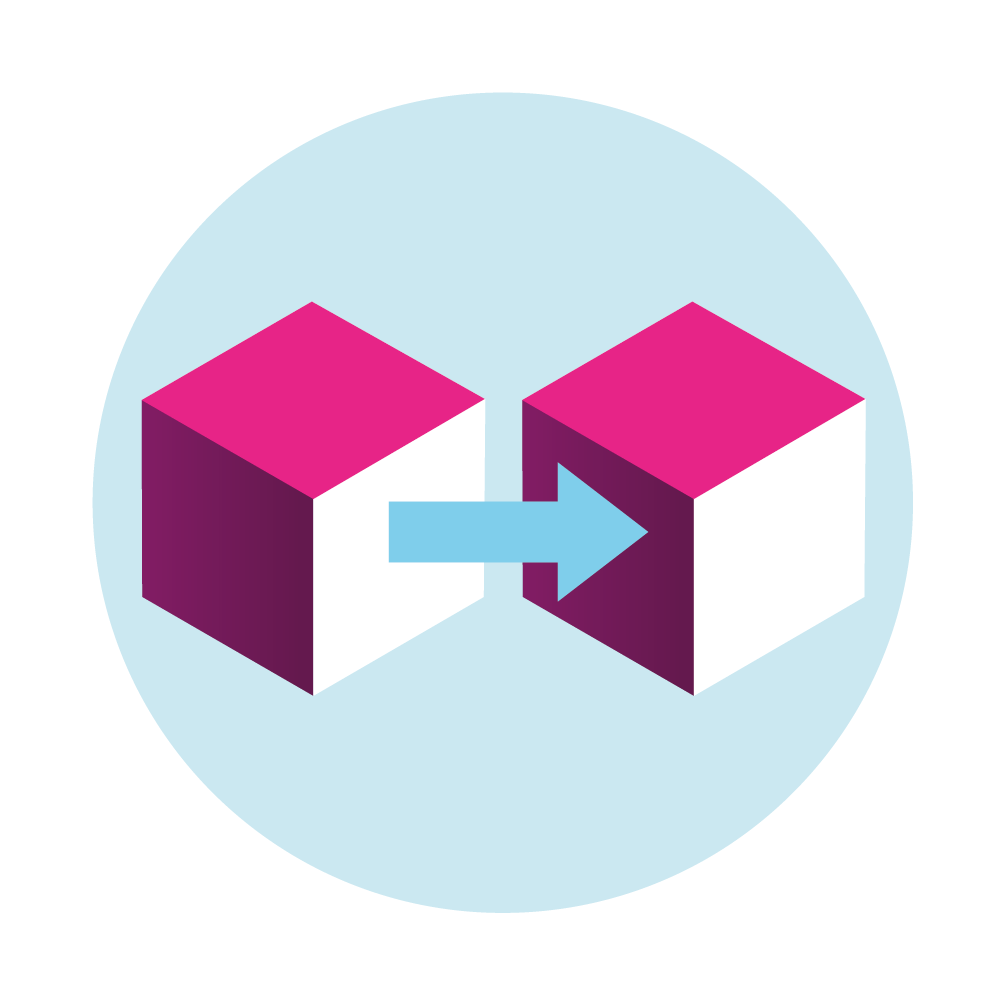 |
Back up your content offsiteA huge range of threats can endanger your digital collections and the work that’s been put in to create them. Whether it’s computer failure, fire or flood, or simply failing to continue to pay for a cloud storage account, it’s important to not keep all your eggs in one basket. Making more than one copy of digital collections creates means your content is more likely to remain accessible. |
Just One Thing
A great way to start is to back up your digital collections to an offsite location. There are a range of ways to do this. Backing up to several external hard drives that are kept at different locations and rotated monthly is a manual approach. Replicating your content to the cloud using a simple cloud provider account is a more automated alternative but may have a higher cost.
Next steps…
Whichever method you choose, it’s critical to ensure that the backup process continues over time and that the additional copy, or copies, that you create are not forgotten about. At the next level we’ll consider how to replicate your content in a way that will mitigate all the common threats and ensure your digital collections will survive the test of time.
Make Copies - Level 2
|
The 3 – 2 – 1 RuleKeeping a copy (or copies) of your digital content is a great step towards keeping your content safe. But just in case the unthinkable happens and the original digital file and the copy become unusable in some way, it’s best to have contingency in place. The 3 - 2 - 1 copy rule offers more piece of mind that at least one of your copies will be safe. This rule is described in more detail below. |
The 3 – 2 – 1 rule is simple-
| 3 copies of each file | On 2 types of storage medium | With at least 1 copy offsite |
 |
||
In an ideal world, using the 3 – 2 – 1 rule, you will make three copies of each file you have. These copies will then be split and stored on different storage mediums, for example, one on an external hard drive and two copies in cloud storage. At least one of these copies will be held off site. In this example, cloud storage ticks this box, but if you store your content on a laptop and an external hard drive, the external hard drive should be stored in a separate location from the laptop so the two cannot be damaged at the same time.
Storing files in this way does mitigate risk to your content, but it is not always possible. As many copies as you can manage stored separately from each other is still good digital preservation.
Next Steps
Now that you have several copies of each file, your content is automatically better protected. However, it is still important to carry out regular checks on your content to keep it accessible and usable. Level 3 will tell you more about how to do this.
Make Copies - Level 3
|
Check your copiesHaving more than one copy is one way of ensuring your files will remain accessible over the long term. However, it is also important to regularly check that the content you are storing hasn’t been changed or damaged in some way. Digital content is more fragile than physical records and will become obsolete or “rot” as technology and formats change or if storage media becomes damaged. The process of file checking is called fixity checking. This short clip explains why and how this is caried out. There are several ways of doing this. |
If you store your content in a cloud environment, such as Amazon AWS or Microsoft 365, your data will be backed up and basic checks carried out as part of the subscription you pay. This does not produce reports, so you won’t know if any files have been changed or fixed during the checks, but your files should remain operational. You can also pay extra on your subscription to have more in depth checks performed and logged.
If your files are stored on another medium, or you want to run a check yourself, the easiest option is Fixity Pro. An easy-to-use program which allows you to schedule and run your own fixity checks while providing detailed reports. Fixity Pro is $50 (or your local equivalent) per year, so is a cost-effective option. This video shows you how Fixity pro works.
Corz is another tool option, but make sure you read the listed disadvantages before you attempt to use it as it may not be suitable for your purposes. There are other software options available which are free to run, but they can be complex to use, and in some cases, knowledge of your computer command line or terminal, or coding experience may be needed to make them work
Create/Choose your content Case Study
|
Your Name: |
Dr Milton Brown |
|
Community Group Name |
Kirklees Local Television |
|
Focus of Community Group |
Heritage, culture, diversity, inclusion, equality, equity, celebration, promotions and campaigns |
|
Type of Records held |
Documentaries, Short Films and Written stories |
|
Size of collections in GB |
5 to 6 thousand GB |
How did you get involved with your community group?
I got involved with our community groups through personal interest and outreach efforts. I am the founder of Kirklees Local TV (https://kirkleeslocaltv.com/) and established the grassroots media production company in 2012 to celebrate, commemorate and educate the broader communities, public, private and voluntary sector services of the rich heritage social-cultural capital that exists in grassroots communities. Our primary goal is representation, inculcation, raising the profile of marginalised communitas and creating equitable opportunities in minority and low socio-economic challenged communities.
Since 2012, we have involved over 700 volunteers in various projects. We now have over 4,500 videos and approximately 8,500 contributions to the website: blogs, articles, social media streams, podcasts, photographs and social media feeds.
How do you collect material for your collections?
Collecting material for our collections is an enjoyable, challenging and meticulous process. We employ several methods to gather relevant items:
Donations: We receive donations from community members and local organisations who wish to contribute to KLTV’s platform.
Fieldwork: Our volunteers engage in fieldwork, such as visiting historical sites or conducting interviews, to gather firsthand material for the website.
Training & Development: We develop our volunteers in photography, videography, editing, oral history techniques, journalism and media, archiving, and digital preservation.
What processes are in place to manage and process your collections?
Our process of collecting and managing our collection is threefold:
Acquisition: We first assess and acquire materials through the methods mentioned above. Each item is evaluated for relevance, condition, and authenticity before deciding how, who, and where we will store the new material.
Cataloguing: Once an item is recorded, documented, or collected, it is meticulously catalogued in the KLTV archive. The process involves documenting its origin, condition, and other relevant information. Each item is assigned a unique identifier to ensure it can be easily located and referenced by our Chief Editor and others in the company. KLTV’s current archive content is available for viewing directly from the website and encompasses various documentaries, videos, podcasts, articles and images (https://kirkleeslocaltv.com/).
Storage and Access: Finally, items are stored in a controlled environment to preserve their condition. We use specialised storage solutions tailored to the needs of different types of materials. We have a collection at the Heritage Quay Archive based at the University of Huddersfield (https://heritagequay.org/archives/WYA/?view=item) and with the Community Achieve Heritage Group (CAHG) as noted in their database as numbers 683 and 779. You can access the database here: https://drive.google.com/drive/folders/1WmJ3H-ixDFRk1PmI8DXDYEiPR3h49x8r.
The University of Huddersfield Heritage Quays has acid-free boxes for paper climate-controlled rooms for delicate artefacts. The university and CAHG provide access to our collection, which is managed through a digital database, allowing researchers to locate and request items for study.
How do you preserve your collections?
The Heritage Quay Archive based at the University of Huddersfield and the Community Achieve Heritage Group (CAHG) provide a range of guidance and support in the preservation of our collections. The Heritage Quay Archive support our digital preservation work. Additionally, since 2020, we have built a healthy relationship with the West Yorkshire Archive Service, based at the West Yorkshire History Centre in Wakefield. They continually advise us on good practices when developing and preserving community archives.
Control your content Case Study
|
Your Name: |
Representative |
|
Community Group Name |
Aldermaston History Group |
|
Focus of Community Group |
Aldermaston History Group was founded in 2018 to advance the understanding and sharing of historical information, photos and artefacts about the Aldermaston area. |
|
Type of Records held |
Digital content stored on community website. |
|
Size of collections in GB |
Unknown. |
How did you get involved with your community group?
The group was formed following a Jubilee celebration exhibition in Aldermaston Parish Hall in 2017, where a number of people had undertaken research on local history topics. It was felt that this research should be preserved and made easily available, so the idea of a digital archive evolved and was developed into a successful National Lottery bid for funds to develop a website.
Aldermaston History Group is a non-profit membership group; we charge an annual subscription which is designed to cover the cost of website hosting and maintenance, and potential cost of speakers for our quarterly talks, hosted in a room generously provided free of charge by the local pub.
How do you collect material for your collections?
Several members of the newly formed Aldermaston History Group had extensive physical archives which were uploaded to the website and items were allocated individual archive numbers.
What processes are in place to manage and process your collections?
Using the Lottery funds, Aldermaston History Group were able to commission CommunitySites to deliver a website, with elements of customised visual design, incorporating CommunitySites established cataloguing and search software.
How do you preserve your collections?
CommunitySites have hosted the Aldermaston History website since its inception in 2019, including providing hosting upgrades.
We have developed good working relationships with the team at the Royal Berkshire Archives, West Berkshire Heritage and other local history groups. We are currently evolving a donations policy to deal with physical artefacts which we are occasionally offered.
Keep your content Case Study
|
Your Name: |
Hannah Reynolds |
|
Community Group Name |
Glasgow Disability Alliance |
|
Focus of Community Group |
To promote equality, rights and social justice with and for disabled people |
|
Type of Records held |
Photographs from events and materials created by members were scanned and digitised wherever funding was available. This would include artwork, artefacts, poems, photographs, scrapbooks, collages, etc. Animation, podcast episodes, Physical materials that have been created such as bulletins, leaflets, flyers, reports, |
|
Size of collections in GB |
Impossible to say because GDA is unable to retain all collections, and this is not something that they have measured. |
How did you get involved with your community group?
Having always worked with charities, Hannah applied for job with GDA because she liked the ethos of the organisation. When speaking to their CEO during the interview, she valued GDA’s approach to community development which is very human centred. Although GDA is focussed less on showing what has been created but more about what the members get out of their experience via capacity building.
How do you collect material for your collections?
Since GDA seeks to promote diversity by showing how activities can be accessible to a range of disabled individuals, the priority is the process of creating materials and how the individuals feel while doing it rather than the finished outputs.
Where funding is available, these materials will be collected and are often for the purpose of writing funding applications, monitoring and evaluating reports for applications, documenting member testimony, etc. All sessions conducted by GDA will have PAs to help participants. The PAs take photographs as well as tutors and these are saved as a collection, often for the purpose of putting together their Learning Bulletin.
What processes are in place to manage and process your collections?
Since the outputs aren’t as important as the activity itself, GDA tries to encourage their members to take things home with them. Specific projects are documented because they are relevant to funding received. GDA store this in their digital database while they encourage members to retain the original. Unless the materials have a particularly strong message or have been provided funding to retain them, these will not be kept.
The materials in the digital database are always clearly labelled with named folders and are often arranged by location and year. GDA often cross reference the materials in their database with the register of those who attended sessions.
How do you preserve your collections?
GDA have a server held in their office – the Digital Learning manager/co-ordinator will make sure that all relevant materials that are in scope are saved on the Cloud.
The digital database is for internal use and not accessible externally since its primary purpose is for report writing.
Plan to share Case Study
|
Your Name: |
Representative |
|
Community Group Name |
Know Your Place Bristol |
|
Focus of Community Group |
Know Your Place is a website that allows you to explore your neighbourhood through historic maps, images and linked information. Know Your Place allows:
|
|
Type of Records held |
Digital web map resource and additional digital content including PDF and image files. |
|
Size of collections in GB |
Unknown at present |
How did you get involved with your community group?
Not sure our activities count as a group for your criteria. Know Your Place is a local authority digital resource that aims to collect digital heritage content from communities. It started in 2011.
The Know your place website was created by the City Design Group, with funding from English Heritage. This was in partnership with:
-
Geographic Information Services (GIS)
-
Bristol Museums, Galleries and Archives
-
Local volunteers.
How do you collect material for your collections?
All material is collected via the web map resource through the public contribution function. Images, audio, pdfs, films can be uploaded.
Where we closely work with targeted groups we will sometimes assist with digitisation of physical archives.
What processes are in place to manage and process your collections?
Know Your Place uses a spatial database to manage the data. Verification etc is all run in ArcGIS desktop software. The main challenge has been storing media within the database particularly where multiple images etc relate to a single spatial reference. This is in the process of being refined and updated.
How do you preserve your collections?
Close working relationships with local archives particularly Bristol Archives is essential for us to ensure that we are co-ordinated. However, as yet Bristol does not have an official digital archive and KYP is not really a digital archive, but an online platform enabling public access to material. We would always recommend that partners consult the local archive collections concerning long term storage or better still the ADS.
Understand your content Case Study
|
Your Name: |
Group Representative |
|
Community Group Name |
Bowburn Local History Society |
|
Focus of Community Group |
Our focus is on the history of Bowburn, in County Durham, and surrounding area. Bowburn is a former colliery village, whose pit (Bowburn Colliery) produced coal from 1908 till 1967. |
|
Type of Records held |
Digital content which has been created via digitisation |
|
Size of collections in GB |
Unknown at present |
How did you get involved with your community group?
Our focus is on the history of Bowburn, in County Durham, and surrounding area. Bowburn is a former colliery village, whose pit (Bowburn Colliery) produced coal from 1908 till 1967.
How do you collect material for your collections?
We have a dedicated room in the local Community Centre in which we have a collection of books, maps, photographs and memorabilia. We have tried to digitise photographs, maps and written information, using a laptop belonging to the group.
What processes are in place to manage and process your collections?
The biggest challenges are technical know-how and funding – lack of, in both cases! – but also time. We rely on the goodwill of our small number of active members to maintain a catalogue of what we have in our collection. We were recently (in 2023) helped by some volunteers from Durham University to restore order and update our catalogue, after a period of disorganisation during the pandemic. This help was greatly appreciated.
How do you preserve your collections?
We have no particular strategy in place – just a hope that new members will in due course be recruited to carry on our work.
Subcategories
Template for building a Business Case
This section provides guidance on the content that will be useful to include in your business case, but it will likely need to be adapted to the structure used in your organization’s template.