








































































































































Digital Preservation Awards 2024
The search for the very best work in digital preservation will begin again this year with the Digital Preservation Awards 2024!

Organized by the Digital Preservation Coalition (DPC) every two years, the prestigious Digital Preservation Awards is the most prominent celebration of achievement for those people and organisations who have made significant contributions towards a sustainable future for our digital assets.
The exciting process will culminate in a presentation at the iPres 2024 Conference in Ghent on Monday 16th September 2024.
Visit this page again soon for more information about how to participate.
Digital Preservation Awards 2026: Sponsorship
We are very grateful to our sponsors and DPC Supporters for their generous contributions. Their support helps us recognize and celebrate outstanding contributions to digital preservation. A small number of sponsorship opportunities are still available, and we would be pleased to hear from organizations interested in supporting the Awards.
Headline Sponsor
The Digital Preservation Awards 2026 are proudly supported by Artefactual Systems as Headline Sponsor. Their support helps celebrate outstanding achievements in digital preservation from across the global community.
Category Sponsors
-
The International Council on Archives, sponsor of the Award for Collaboration and Cooperation
-
National Library and Archives Board, Singapore - Award for Research and Innovation
-
KB National Library of the Netherlands, sponsor of the Award for Teaching and Communications
-
The National Archives (UK), sponsor of the Award for Safeguarding the Digital Legacy
-
The Award for the Most Distinguished Student Work
-
The Research Data Alliance, sponsor of the Award for the Most Outstanding Digital Preservation Initiative in Commerce, Industry and the Third Sector
-
Academic Preservaton Trust, sponsor of the Award for Resilience, Maintenance and Continuity
We are especially grateful to MediaArea.net, organizers of the No Time to Wait conference, and to the Filmoteka Narodowa – Instytut Audiowizualny (FINA) for so generously hosting the tenth edition of the Digital Preservation Awards in Warsaw.
Our DPC Supporters are Bronze Sponsors of the Digital Preservation Awards


Sponsorship opportunities
A limited number of sponsorship opportunities remain available, including category sponsorship and other partnership options. If your organization would like to sponsor the Digital Preservation Awards, please email angela.puggioni@dpconline.org.
Digital Preservation Awards 2026: Judges
The Digital Preservation Coalition is pleased to announce its international panel of expert judges for 2026:
Hamad Abdulla Al Mutairi
International Council on Archives
Dr Hamad Abdulla Al Mutairi is the Executive Director of the UAE National Library and Archives, where he oversees six directorates spanning archival services, library operations, research, community engagement, strategic planning, and institutional services. With more than two decades of leadership in cultural heritage and information management, he has been instrumental in advancing the UAE’s archival and digital preservation landscape. He has also served as Co-Chair of the ICA Abu Dhabi Congress in 2023 and as a member of the Programme Commission (PCOM), contributing to initiatives that promote innovation, inclusivity, and professional development across the ICA community. Dr Al Mutairi holds a Professional Doctorate in Information Studies, with research focused on applying artificial intelligence to the archival value chain.
As ICA Vice-President Programme for 2025–2029, Dr Al Mutairi aims to strengthen international collaboration, support capacity-building and research, and advance the adoption of emerging technologies to ensure archives continue to serve as vital resources for knowledge, identity, and cultural memory worldwide.
Matthew Burgess
State Library of New South Wales
Matthew Burgess is a digital preservation specialist focused on standards and practices for managing born-digital collections. As Lead Digital Archivist at the State Library of NSW, he works with internal and external partners to strengthen digital preservation capability and ensure long-term access to digital heritage. He leads the Digital Preservation Network for National and State Libraries Australasia and contributes to regional initiatives of the Digital Preservation Coalition.
Gustavo Castener Marquardt
International Council on Archives
Gustavo Castañer is a professional archivist and records manager. He currently works as Unit Head of Information Resources and Services at the Asian Development Bank (Manila). He has worked previously in archives and records management of the United Nations, International Monetary Fund, European Commission, Council of the European Union and European External Action Service, as well as Spanish State Archives and the National Archives of Catalonia. He is especially interested in archives of international organizations, collection outreach, archival education and the use of archives to promote accountability and the defense of Human Rights. Within ICA, he has served previously as Chair of the Section of International Organizations and board member of the Section of Archives and Human Rights.
Fatima Darries
University of South Africa (UNISA)
Fatima leads and manages strategic Library initiatives in research data curation, digitisation of heritage and special collections, digital preservation, and metadata description of commercial and digital information resources at Unisa Library and Information Services. Her career has spanned both client and technical services in the Academic Library Sector.
She continues to serve as South African country editor on E-LIS, the international archive for Library and related sciences, as well as on the Management and Government Subcommittee of the Digital Preservation Coalition. Previously, Fatima served two terms on the Board of the National Library of South Africa, as well as serving the higher education sector for 10 years as a Board member of HERS SA, a network for women in higher education. She has served in various portfolios in the Library and Information Association of South Africa (LIASA). Fatima holds a Master's degree in Library and Information Science from the University of Cape Town, and graduated in 2024 with the Graduate Certificate in Digital Curation from the University of Maine.
Mihaiela Donisa
Bank for International Settlements
Mihaiela is the Archivist of the Bank for International Settlements (BIS) since 2019, leading projects on digitisation, access and digital preservation of the institutions' collections. The BIS is an international organisation established in 1930 and its mission is to support central banks' pursuit of monetary and financial stability through international cooperation, and to act as a bank for central banks.
Mihaiela holds a MA in Archives and Records Management from UCL and has previously worked in archives and records management roles for European Bank for Reconstruction and Development, BBC and the European Medicines Agency.
Lisa Griffith
Digital Repository of Ireland (DRI)
Lisa Griffith is Director at the Digital Repository of Ireland (DRI). She has worked at DRI since 2017, holding a range of senior roles including Membership Manager and Programme Manager. Lisa has spoken nationally and internationally on DRI’s work and the topics of digital preservation, archives, and digital Infrastructures. She has contributed to several National Open Research Forum (NORF) committees and served as chair of the NORF PID Strategy Working group from 2023 to 2024. Lisa holds a PhD in history from Trinity College Dublin.
Hilary Hanahoe
Research Data Alliance (RDA)
Hilary serves as Secretary General of the Research Data Alliance and CEO of the RDA Foundation, leading a global community of over 16,000 members across 151 countries. She provides strategic leadership whilst managing operations, cultivating relationships with funders and stakeholders, and ensuring long-term sustainability. Her work centres on stewarding RDA's dynamic volunteer community dedicated to enabling open data sharing and reuse globally, championing the organisation's mission to break down barriers to global data accessibility.
Haliza Jailani
National Library Board Singapore
Previously responsible for the digital infrastructure programme at the National Library Board (NLB) of Singapore, Haliza worked on digital preservation early in 2008 implementing Rosetta for NLB and operationalising digital preservation processes. She is currently Senior Deputy Director of Resource Discovery & Management, overseeing a team of librarians responsible for cataloguing and knowledge organisation systems, including metadata for digital preservation and linked data for discovery.
William Kilbride
Digital Preservation Coalition (DPC)
Executive Director for the DPC, William is the Acting Overall Chair of the Judging Panel. In his current role at the head of the DPC, he provides training and support to members as well as supporting the digital preservation community through advocacy work and enabling strategic partnerships. William is a prolific writer and speaker on the subject of digital preservation and has many years’ experience in the field, having previously held senior positions at Glasgow Museums and the Archaeology Data Service.
Michael Launchbury
The National Archives, UK
As Senior Digital Archivist Transfer Lead at The National Archives, Michael Launchbury manages born-digital transfers from government departments and public inquiries, ensuring records and metadata are prepared to remain permanently preserved and accessible. He previously worked as a Digital Archivist at the Lloyds Register Foundation, home to one of the world's largest maritime archives, where his work included managing legacy born-digital material on obsolete physical media. He completed his professional qualification in Archives and Records Management at UCL.
Nicola Laurent
Australian Society of Archivists / University of Melbourne
Nicola Laurent is the Senior Project Archivist on the Find & Connect web resource at the University of Melbourne and a PhD candidate in the School of Social Work at the University of Melbourne undertaking research into the prevalence and impact of trauma in archives. Nicola is the International Council on Archives' New Professionals Programme Coordinator, a member of the National Archives of Australia’s Advisory Council, and a member of the Australian Society of Archivists (ASA) Advocacy Committee. She is the immediate past President of the ASA.
Thomas Ledoux
Bibliothèque nationale de France (BnF)
Thomas is the coordinator of digital production at the Bibliothèque nationale de France / National Library of France (BnF), where he has work as a software engineer for over 25 years. He has always been interested in digital objects, ranging from access on public workstations to his involvement in the BnF's Scalable Preservation & Archiving Repository (SPAR). He regularly collaborates on various open source software, such as Jhove or Archifiltre.
Jeanne Kramer-Smyth
World Bank Group
Jeanne Kramer-Smyth earned her Masters of Library Science from the Archives, Records and Information Management Program at the University of Maryland iSchool after a 20-year career as a software developer designing relational databases, creating custom database software and participating in web-based software development. She is the author of Spellbound Blog, where she has published dozens of essays exploring the intersection of archives, technology, metadata, visualization and the web. Jeanne joined the World Bank Group Archives team in 2011. Established in 1945, the World Bank Group is an international organization whose aim is to reduce poverty and promote shared prosperity around the world, and whose archival holdings illuminate the Bank’s engagement with its member countries to promote economic development. In her current role as the Digital Preservation Program Lead, she oversees the Archives Systems and Digital Preservation team and divides her remaining time between strategic planning and hands-on problem solving.
Jenny Mitcham
Digital Preservation Coalition
Jenny Mitcham is Chief Digital Preservation Officer at the Digital Preservation Coalition where she supports the DPC’s Good Practice and Workforce Development strategic objectives. She works closely with the members of the Coalition on their digital preservation challenges, as well as organising events and producing publications and other resources to support the community. She specialises in certification and maturity modelling and has an interest in finding ways of lowering the barriers to digital preservation to those who are just getting started in this field.
Jo Ana Morfin
Ex Teresa Arte Actual, INBAL
Jo Ana, Deputy Director of Ex Teresa Arte Actual, is a conservator of time-based media who works with cultural organizations and small communities of practice in the preservation of contemporary cultural and social legacies rooted in ephemera and obsolete technologies. Her practice focuses on the research and implementation of community-driven methodologies that foster inclusive, ecologically responsible, and socially embedded digital preservation practices.
Sonia Ranade
The National Archives UK
Dr Sonia Ranade is Head of Digital Archiving at The National Archives (UK), with responsibility for services supporting selection and transfer of digital records by UK Government departments, permanent preservation of the digital Public Record and access to born digital records. Her research interests include probabilistic approaches to archival description, digital preservation risk and developing new access routes for digital archives. Sonia holds a PhD in Information Science.
Arif Shaon
Qatar National Library
Arif Shaon is the Head of Digital Curation, Preservation, and Access at Qatar National Library, where he leads the strategic and operational work for the long-term curation, preservation, and accessibility of the library’s digital collections. He has previously held key roles at UNSW Library at the University of New South Wales in Australia, and at the Science and Technology Facilities Council in the UK, where he led software development and research initiatives in digital preservation, digital curation, and research data management.
Barbara Sierman
DigitalPreservation.nl / DPC Fellow
Barbara Sierman worked from 2005 to 2020 as the digital preservation manager at the Research Department of the KB National Library of the Netherlands. She was active on the Board of the Open Preservation Foundation and the Steering Committee of the IIPC. In 2018, she was awarded the Digital Preservation Coalition Fellowship for her contribution to the field of digital preservation. After her retirement, she founded DigitalPreservation.nl and worked as a consultant on digital preservation topics for various clients such as OPF, NANETH, CTS, DPC and NDE. Currently, she is preparing a publication about the beginning of digital preservation in the European National Libraries.
Marjolein Steeman
The Netherlands Institute for Sound and Vision
Marjolein works on projects in the area of preservation and metadata, developing and implementing preservation plans for new formats and archive services. She has worked at Beeld & Geluid / Sound & Vision for over 15 years. She studied information science at VU University Amsterdam and worked for years as an expert in data analysis and data management. Among other things, she has worked to secure various catalogs that came to Sound & Vision via merger partners or depositors. As a preservation officer, Marjolein is responsible for the preservation policy of Sound & Vision. She is also a member of the Editorial Committee of PREMIS, the data standard for preservation metadata. In addition to the certification as a sustainable archive (CTS), the ISO certificate for information security (27001) also falls under her care.
Nathan Tallman
Academic Preservation Trust
Nathan Tallman is Executive Director of Academic Preservation Trust where he articulates a vision and executes strategic management for a community-owned distributed digital preservation service. He provides operational oversight of APTrust operations, including the development of plans and processes for the lifecycle of deposited content and the integration of digital preservation processes at existing and prospective APTrust member institutions. Previously, Nathan served as Digital Preservation Librarian and Penn State University and Digital Content Strategist at the University of Cincinnati.
Heather Tompkins
Library and Archives Canada / Bibliothèque et Archives Canada
For the past 18 years, Heather Tompkins has helped shape how Library and Archives Canada (LAC) preserves the country’s digital heritage. As a Senior Project Officer in the Digital Collections and Operations Division, her work includes providing strategic advice on the transfer and processing of digital records, contributing to policy development, and establishing LAC’s Pre‑Ingest procedures. After serving as a judge for the 2024 awards, Heather is excited to return for 2026 to celebrate the outstanding new work underway and to recognize the people who make it possible.
Benjamin Turkus
New York Public Library
Ben Turkus is the Senior Manager of Audio and Moving Image Preservation at the New York Public Library. In this role, he oversees the in-house AMI digitization lab and manages complex, large-scale vendor preservation projects across magnetic, optical, and film formats. Previously, Ben worked at the Bay Area Video Coalition (BAVC) and has taught as an adjunct professor in New York University’s Moving Image Archiving and Preservation (MIAP) program for eight years.
Jessica Venlet
National Digital Stewardship Alliance
Jessica Venlet works as the Project Manager for Digital Repository Technology at the University of Michigan Library. In this role, she is responsible for facilitating and coordinating the planning and implementation of digital repository systems that meet the library's digital preservation and access goals.
Ingeborg Verheul
KB National Library of the Netherlands
Ingeborg Verheul is currently working as Advisor Digital Preservation & Permanent Acces at the KB/National Library of the Netherlands. Throughout her carreer as a community manager she always keeps a strong focus on enhancing the connection between cultural heritage and Open Science. To some of us her name might sound familiair as in 2006 she was the author of the famous IFLA publication 'Networking for Digital Preservation', at that time a must read for every newcomer in the Digital Preservation field in the National Library.
Jaye Weatherburn
University of Melbourne
Jaye Weatherburn is Head of Digital Preservation at the National Film and Sound Archive of Australia. Her work spans digital preservation strategy, operating model design, digital archiving practice, and the stewardship of complex digital heritage. She has led digital preservation programs and contributes to sector-wide collaboration and community development. Jaye is co-author of Preserving Digital Materials, 3rd edition (2018).y.
Elżbieta Wysocka
National Film Archive – Audiovisual Institute (FINA)
Elżbieta Wysocka is a restorer and researcher specializing in film, video and digital art. She has led national and international projects in film restoration, digitisation, cataloguing and digital preservation at the at the National Film Archive – Audiovisual Institute (FINA). She also guided the development of the Media Asset Management system and the digital preservation strategy at FINA. A member of the FIAF Cataloguing and Documentation Commission, she also worked as film restorer at Deutsche Kinemathek (FFE Program). Since October 2024, she has been Director of Digital Collections and Digitisation at FINA.
Digital Preservation Awards 2026: Timetable
Entrants for the Digital Preservation Awards must submit a nomination by 09:00 (UTC) on Tuesday 5 May 2026 (see ‘How to Enter' for details).
Nominations are evaluated, and finalists decided by the Digital Preservation Judging Panel Meeting in May 2026.
Once announced, finalists will then be required to do the following:
-
Submit a 3-minute lightning video outlining the key elements of the initiative. More details will be provided at this stage.
-
With the exception of the Student Award, attend an online interview with the Judging Panel week commencing 13th July 2026, explaining the importance of the initiative the field of digital preservation.
-
Provide good quality visual material – at least three hi-res jpeg images (e.g., project team, location shots, screen shots, products) – of the project to be used in publicity material relating to the Award and/or the Awards ceremony.
Only finalists will be asked for full details of their projects.
The following gives an outline of key dates. Dates will be finalized and agreed at the earliest opportunity.
|
19 March 2026 |
Launch of the Digital Preservation Awards 2026 |
|
2 April 2026 |
Second call for nominations |
|
23 April 2026 |
Final call for nominations |
|
5 May 2026 |
Nominations close |
|
26 May 2026 |
First Judging Panel (Shortlisting) |
|
15 June 2026 |
Finalists announced and invited to presentation |
|
16 June 2026 |
Online voting for finalists opens |
|
6 July 2026 |
Online voting closes |
|
15 July 2026 |
Second Judging Panel (presentations and interviews with finalists) |
|
15 October 2026 |
Awards presented |
We are very grateful to our sponsors and DPC Supporters for their generous contributions which enable the Digital Preservation Awards to take place:
If your organization would like to sponsor the Digital Preservation Awards, please email angela.puggioni@dpconline.org.
Digital Preservation Awards 2026: Eligibility and Frequently Asked Questions (FAQs)
Scope
-
The Judges will assume a broad definition of digital preservation: projects which describe themselves with specialist terms like ‘conservation’, ‘continuity’, ‘curation’, ‘legacy’, ‘permanent accessibility’, ‘sustainment’ or ‘sustainability’ will be eligible so long as they can demonstrate that they are working towards a sustainable future for our digital assets. Typically, digitization projects will not be eligible unless they offer a specific deliverable that will improve long term access to the digital estate. The Judges’ decision will be final, and no discussion will be entered into.
Deadline
-
There will be no extensions to the deadline.
Who can apply?
-
The awards are open to all. They seek to include entries from all organization types, across all sectors – public, private, for-profit, and non-profit and nominees do not need to be members of the DPC. The awards are international in scope and the project may have been carried out anywhere in the world; Judges will be looking to see how results and lessons learned are being shared with the wider digital preservation community so that they may also learn from the efforts undertaken. Nominations must be supported by senior management within your institution and nominations based on an external grant or commission should be supported by the grant giving agency or commissioning agent. Joint nominations are welcome from individuals or teams working in the public or private sectors, though a single point of contact must be agreed. There is no fee to enter the Digital Preservation Awards.
Do I need support from my manager?
-
Yes. The purpose of the Digital Preservation Awards is about raising awareness about digital preservation. By seeking the approval of management, we are asking you to undertake a modest amount of internal advocacy. For the purposes of the student award, the course convener or head of department is effectively the senior manager. Please address your letter of Support to the Judging Panel.
Why is there a timeframe?
-
The Awards are given for initiatives that were completed between 1st August 2024 and 31st July 2026 which is the period since the last Digital Preservation Awards, though Judges will be asked to use their discretion in the admittance of nominations which have been completed outside that period. NB: although the completion date should fall between the dates given, work may have begun at any date.
What can we submit?
-
Any project or initiative which has contributed towards a sustainable future for our digital assets. By ‘project’ we mean any sustained and unified effort that works towards a discrete and definitive outcome. This might include the development and delivery of innovative services or a single program of work. Pilot projects and full-scale projects can be submitted though nominees may wish to signal the relationship between them. Combinations of projects which happen to operate in the same sphere, but which have no structural linkage should be avoided and large or complex projects are encouraged to concentrate on specific deliverables which can be more readily understood. Small projects with modest outcomes are particularly encouraged to apply because impact will be assessed in proportion to the total resource expended.
Can I use AI tools to help draft or translate my nomination?
-
Yes but for transparency you must tell us what tools you used and how you used them.
Will you supply travel grants?
-
We are currently fundraising for this and will confirm once we get closer.
Will you give feedback about our nomination?
-
Yes. All nominees get feedback from the Judges and shortlisted candidates will also receive feedback from their peers gathered from the public vote. The feedback will always be constructive, and the Judges encourage nominees to append these comments to their professional and organizational CVs.
Can we promote the fact that we have submitted a nomination, been shortlisted or have won an award?
-
Yes, we actively encourage you to do so. Where possible we will help you by providing supportive quotes or photography and will make time for press calls. The awards are run to engage the widest possible community in digital preservation, so we call on everyone interested in the awards to help raise their profile.
Can I ask your advice about completing my nomination form?
-
Yes, but we reserve the right to publish that advice on the FAQ section of the Digital Preservation Awards Website to ensure that any points of clarification are available to all. We will keep such advice anonymous. There is a comment function on the FAQ section of the website that you can use to ask questions.
Can I nominate someone for the DPC Fellowship Award?
-
DPC members will be formally invited to submit their nominations for the Fellowship Award with the online vote in June 2026. In response to this invitation, members should include their nominations as part of the voting card, or email their nominations to angela.puggioni@dpconline.org and we will collate a list for the Judges’ consideration in July. At this stage, the Judges will also submit their own nominations if not already made and a winner will be decided by the Judges only, from this list. The winner of the Fellowship Award will be decided upon by the Judging Panel from this list of names.
Did this page answer your question? If not, please email angela.puggioni@dpconline.org for further information.
Digital Preservation Awards 2026: How to enter
Applications
Nominations for the Digital Preservation Awards 2026 are now closed.
Thank you to everyone who submitted an entry.
This page explains how to submit a nomination for the Digital Preservation Awards 2026, what information you will need to provide, and the general provisions that apply across all categories.
All nominees should read the Nomination Pack (DPA26A) before preparing their nomination. Nominations must be submitted using the online submission form (DPA26B - now closed). An offline version of the nomination form (DPA26B) is also available below as a checklist, so that you can prepare all required information before completing the online form.
What your nomination must include:
-
An indication of the awards category for which the nomination is being made.
Please indicate the awards category for which the nomination is being made. The same nomination may be made to multiple categories if the criteria is fully met for each. Please note that Judges reserve the right to move nominations into the category they think fits best.
-
A brief summary of the project of no more than 100 words. This wording will be used on publicity material and should be as concise and clear as possible.
The summary text should be written for a lay audience and as accessible as possible – imagine it being reproduced in a newspaper report of winning the award. This is likely to be included on the website and in other communications if you are selected as a finalist.
-
A project description of no more than 1000 words, setting out the nature and purpose of the project, and why it is considered to be a potential Award-winner. The project should demonstrate leadership and advancement in the digital preservation arena.
This longer, more detailed text will be used by DPC members and the Judges to assess nominations in the members’ vote. It is in this description that nominations should be more expansive and assume more knowledge, bearing in mind the diversity of the Coalition and its partners. You may include images and diagrams, although these should be genuine visual aids that help clarify the concepts described in the text. An over-abundance of diagrams may be considered suggestive of a text that needs to be improved.
Diagrams are not included in the word count. You may also include hyperlinks, although please note that the Judges are instructed to assess nominations purely on the merits of the evidence presented to them in the nomination forms (and for finalists, in the subsequent interview). Therefore, you should not require Judges to follow a hyperlink or expect that they will.
Information included in Section four: Supporting Statements can and should be repeated in the Long Description as the two have different functions. The Judges will have access to the complete nomination form and therefore any text repeated between the two. However, finalists will be presented to a vote of the members of the DPC and voters will be given the long description as part of the ballot paper without the supporting statements from Section Four. Furthermore, it is our expectation that our designated contacts in DPC members will cascade the long descriptions through their own organizations so that the vote is cast as a corporate decision. Therefore, we recommend that the long description is written for a lay audience.
Bear in mind when writing both the Summary and Long Description that:
a) the DPC will receive a large number of applications and so good writing will help your application stand out; and
b) Judges come from a range of backgrounds including technology experts, business managers, archivists and academics. Whilst expert in their own fields they may not be expert in dealing with your concerns. It will therefore help the nomination if you are clear and concise with your language.
-
A brief account of how the nomination meets each of the key criteria
-
Up to three images good quality illustrating the project/team or individuals are requested. These may also be used for publicity at finalist stage.
Examples of good images to be included are: team photos, project logos, location shots, photos of any products associated with the nominations – particularly in use, process diagrams (without too much text). These should be provided as hi-res jpegs.
-
The nomination should also be accompanied by a letter of support from a senior manager within the institution.
The reason we seek senior management approval is to allow for appropriate internal advocacy and, to a lesser extent, to ensure we do not receive competing nominations from the same institution or project. A senior manager may be anyone within your organization’s management team, in a position more senior than your own. The letter could be a scanned copy of referral or an email – as long as the senior manager in question is made aware of your work and is happy to support it.
The Judges have been very clear in welcoming all kinds of applications, including personal contributions undertaken outside of an institutional framework. Therefore, the absence of a letter of support should not become a barrier to submission e.g., in the case that the project was undertaken in a personal capacity, with no institutional affiliation.
Please use the offline form DPA26B for a checklist of items you will need to enter the awards and come to the online submission form with all the information you need prepared, and to hand.
Submission deadline
Nominations for the Digital Preservation Awards 2026 closed at 09:00 (UTC) on Tuesday 5 May 2026. Finalists will be announced on Monday 8 June 2026.
General Provisions
The following provisions apply across all categories of the Awards:
-
The judges’ decisions are final
-
Any attempts to influence the judges will result in disqualification
-
All nominations must be submitted on the relevant nomination form
-
The judging criteria published for each award are for guidance: the conditions are not negotiable
-
With the exception of the student award, institutions are welcome to make multiple nominations, even if these end up in competition with each other. The judges welcome the opportunity to judge between them.
-
Where appropriate, a nomination can be submitted against multiple categories provided a convincing case is made.
-
The judges may change the category of a nomination.
-
Judges may not lead nominations. They must declare their interests at the start of each meeting and must leave the room during consideration of the relevant nominations.
-
The staff of the DPC cannot apply, and contractors cannot nominate work which was initiated and funded directly by the DPC.
-
Projects involving the DPC and DPC staff can be nominated but DPC activities must not be the reason for the nomination.
-
The DPC will only name finalists. Nominations will remain confidential.
-
All nominees will receive feedback.
-
Details of finalists will be used only for the purposes of publicizing the Awards. By submitting a form, nominees signify their consent to such publicity.
Digital Preservation Awards 2020
Watch the ceremony
Watch the Digital Preservation Awards ceremony, which took place online for World Digital Preservation Day on 5th November 2020.
Meet the Winners
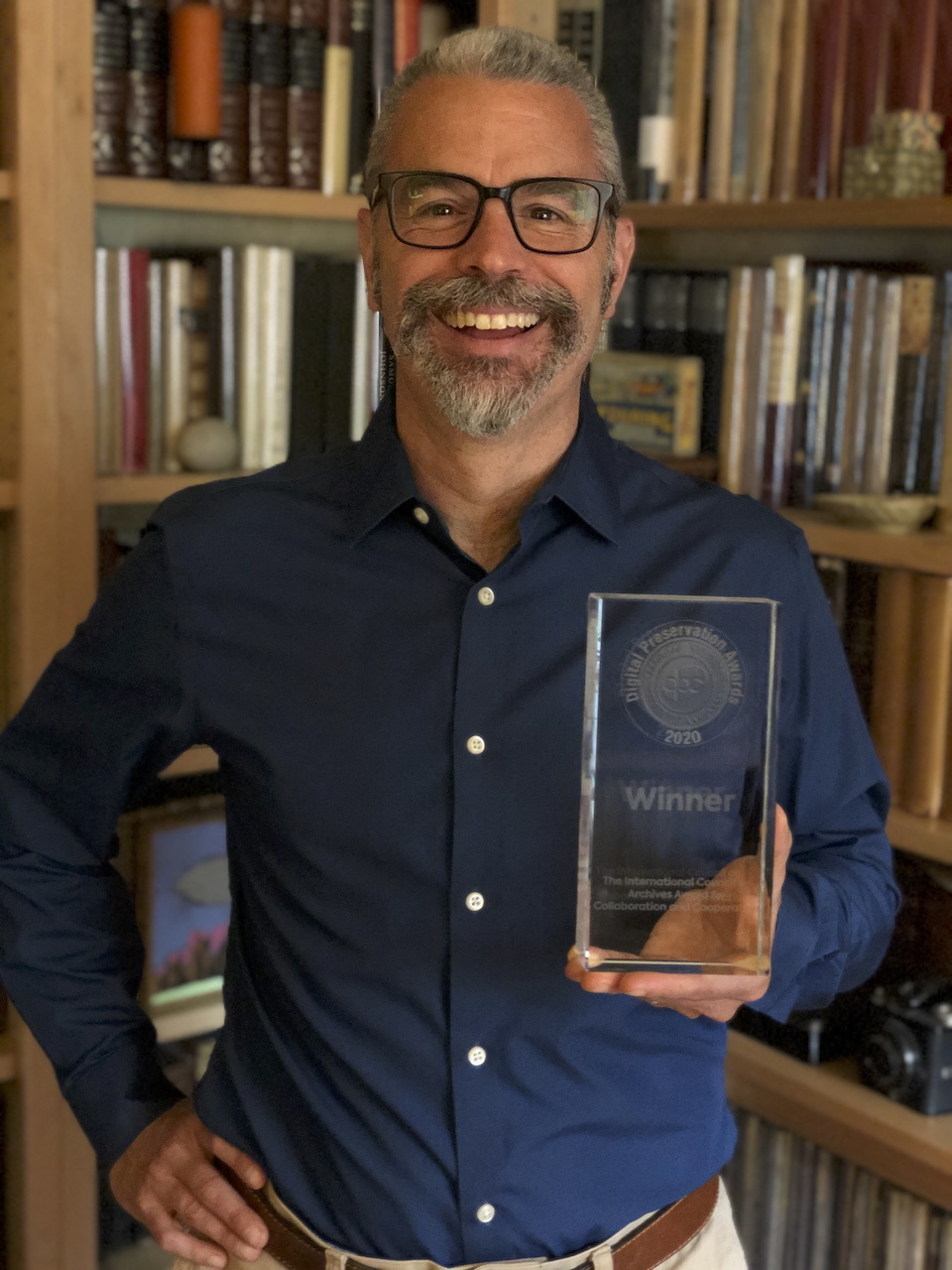
NDSA Levels of Digital Preservation Revision Project
|
2020 Winner of the International Council on Archives Award for Collaboration and Cooperation
|
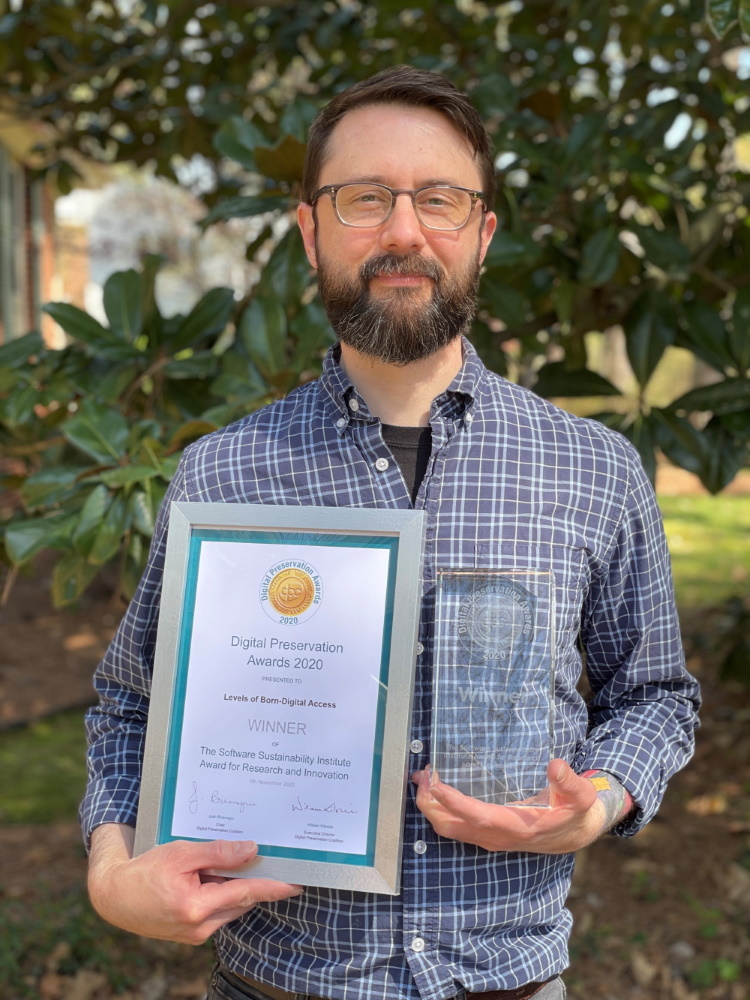
Levels of Born Digital Access
|
2020 Winner of the Software Sustainability Institute (SSI) Award for Research and Innovation
|
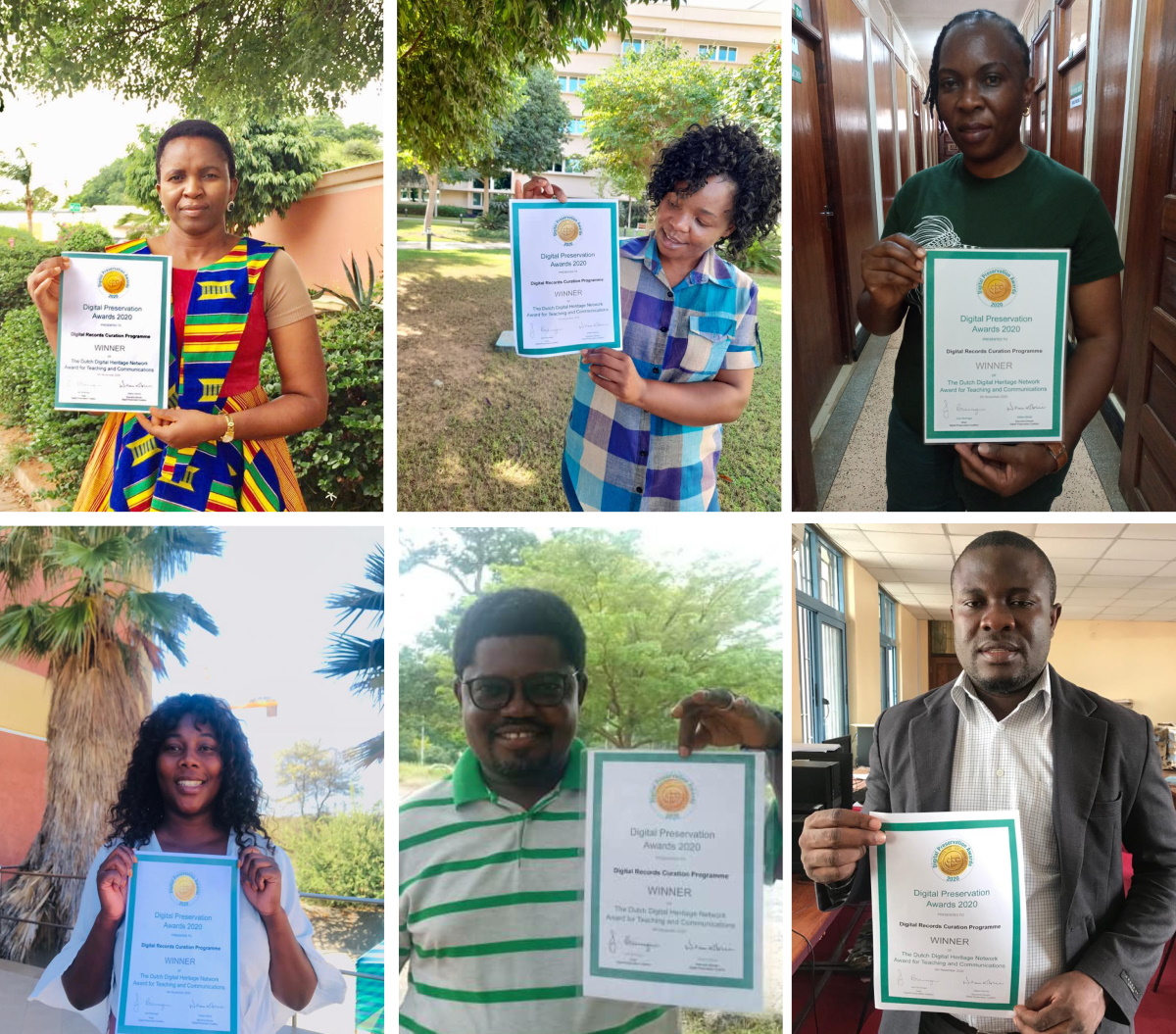
Digital Records Curation Programme
|
2020 Winner of the Dutch Digital Heritage Network Award for Teaching and Communications
|
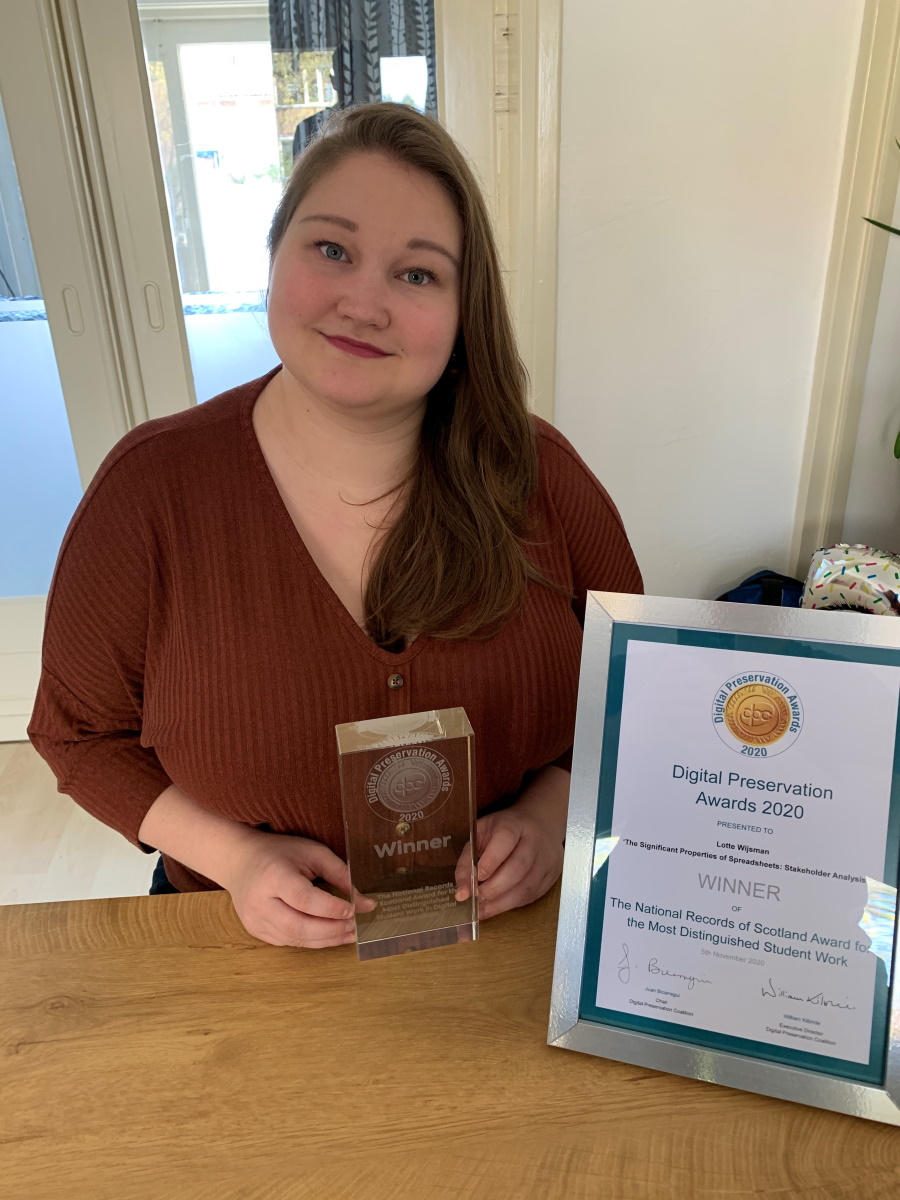
Lotte Wijsman with ‘The Significant Properties of Spreadsheets: Stakeholder Analysis’
|
2020 Winner of the National Records of Scotland (NRS) Award for the Most Distinguished Student Work in Digital Preservation
|
UNHCR Records and Archives
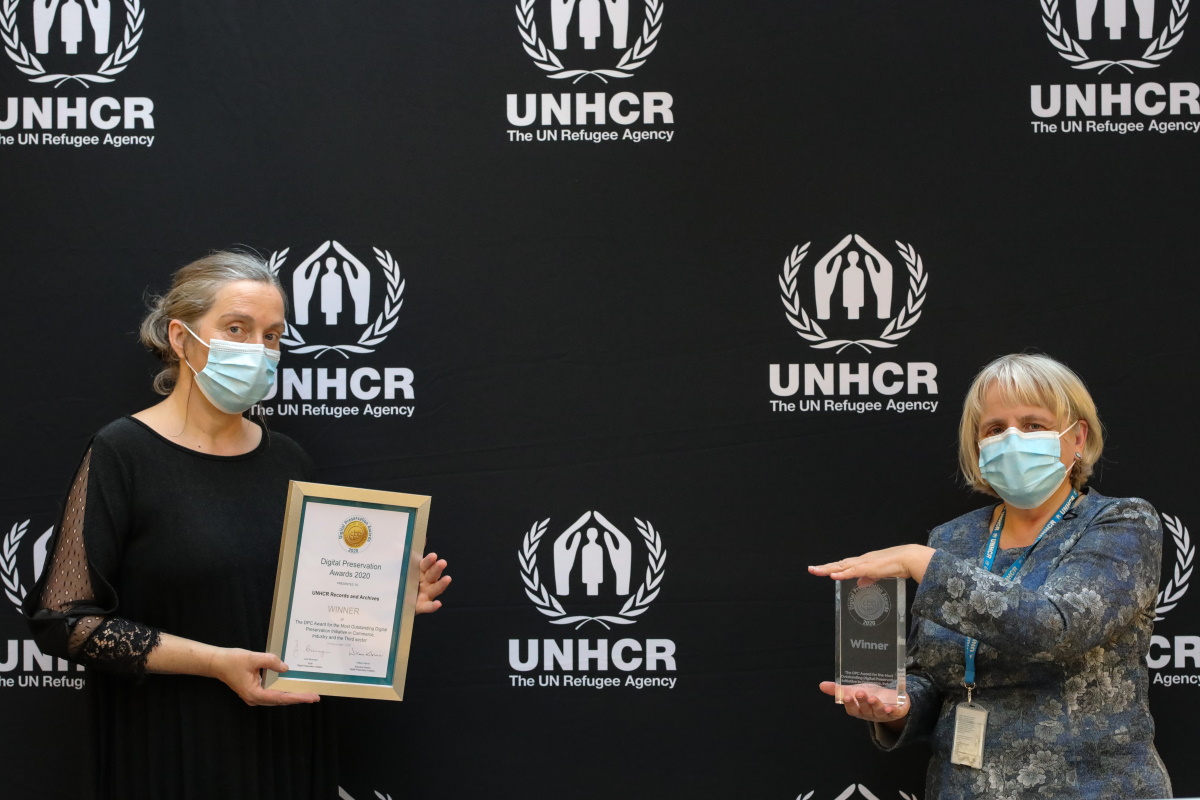
|
2020 Winner of the DPC Award for the Most Outstanding Digital Preservation Initiative in Commerce, Industry and the Third Sector
|
UK Web Archive: celebrating 15 years
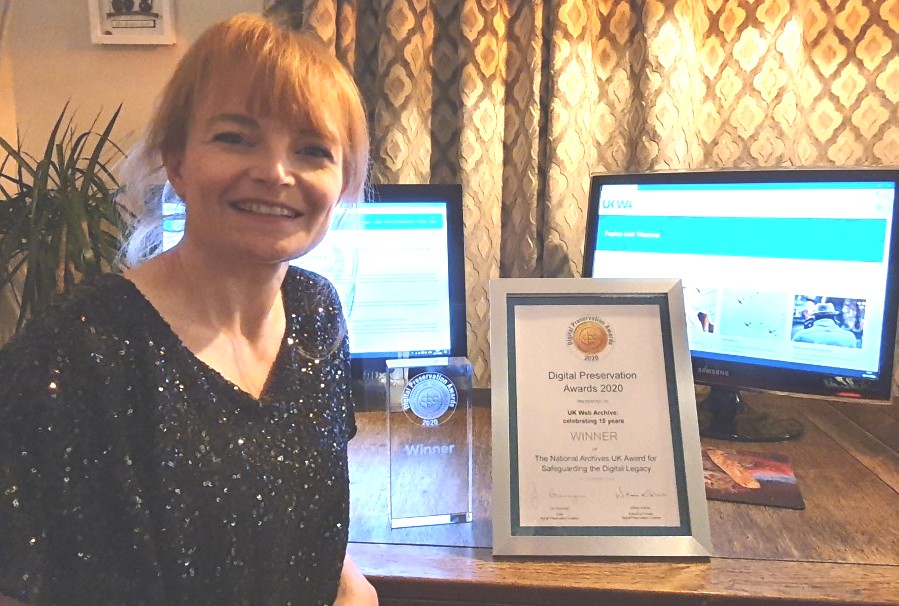
|
2020 Winner of The National Archives (UK) Award for Safeguarding the Digital Legacy
|
Micky Lindlar
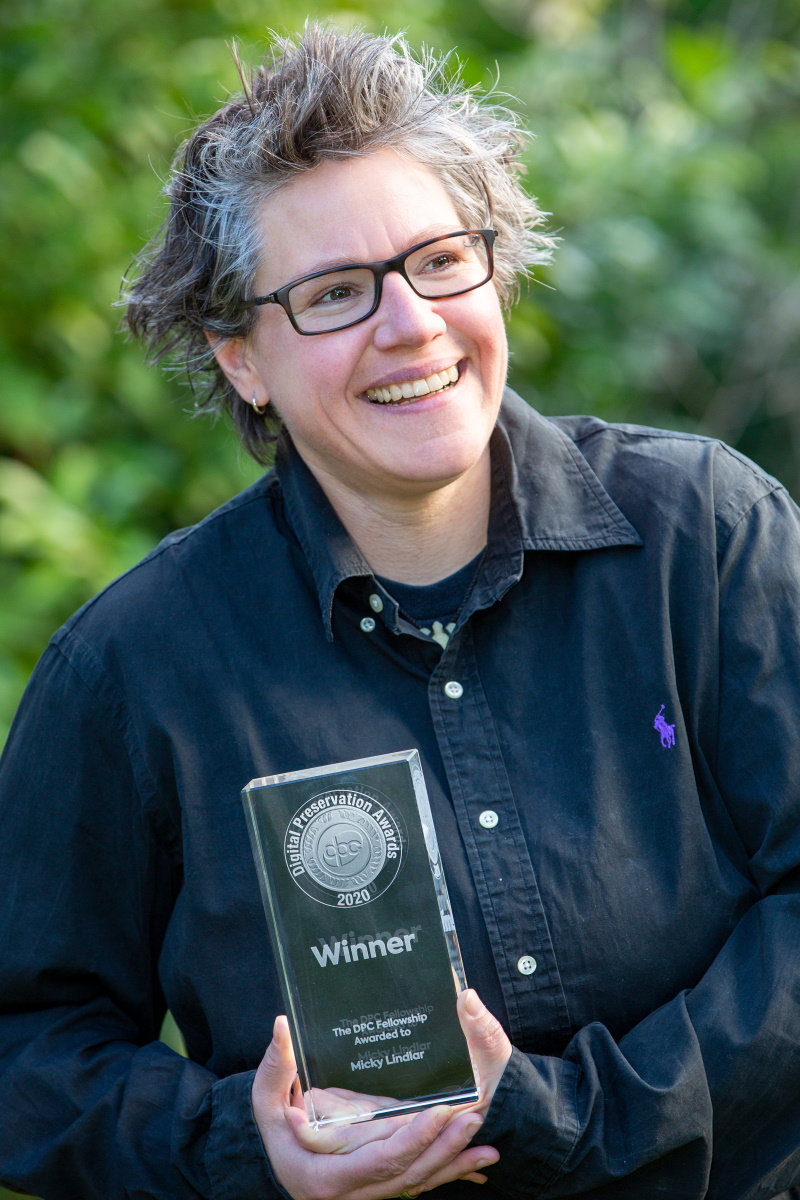 |
2020 The DPC Fellowship Award, presented by Richard Ovenden |
Find out about the Digital Preservation Awards 2020 Finalists
Drawing together the finalists' presentatations from the #WeMissiPRES event in September 2020, hear our Digital Preservation Awards judges as they introduce and reflect on the excellent, inspiring and innovative people and projects they have encountered throughout the awards process.
Watch and learn about each of our incredible finalists as they tell us more about their work.
The International Council on Archives Award for Collaboration and Cooperation
|
The Software Sustainability Institute Award for Research and Innovation
|
The Dutch Digital Heritage Network Award for Teaching and Communications
|
The National Records of Scotland Award for the Most Distinguished Student Work
|
The National Archives Award for Safeguarding the Digital Legacy
|
The DPC Award for the Most Outstanding Digital Preservation Initiative in Commerce, Industry and the Third sector
|
The Digital Preservation Awards are made possible by the expertise and support provided by our international panel of Judges, and funding from our sponsors.
|
Angela Beking, |
Abbie Grotke, |
Roxana Maurer, |
Sheila Morrissey |
|
Neil Chue Hong, |
Natalie Harrower, |
Sally McInnes, |
Marcel Ras, |
|
Susan Corrigall, |
Neil Jefferies, |
Sharon McMeekin, |
Karen Sampson, |
|
Joanna Fleming, |
William Kilbride, |
April Miller, |
Anthea Seles, |
|
Neil Grindley, Jisc |
Kirsty Lingstadt, |
Laura Molloy (Chair), |
John Sheridan, |
Digital Preservation Awards 2018
Watch the ceremony
Watch the Digital Preservation Awards ceremony, filmed live in November 2018 at the Amsterdam Museum in the Netherlands.
Meet the Winners
Stanford University Libraries, ePADD
|
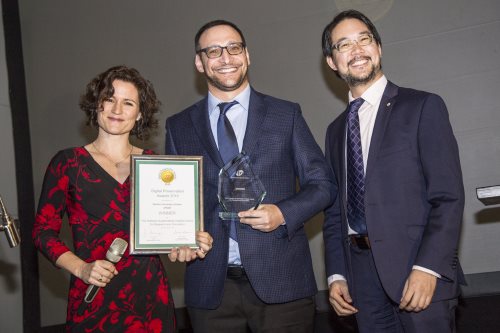 |
2018 Winner of the Software Sustainability Institute (SSI) Award for Research and Innovation
|
Jennifer Allen, Matthew Farrell, Shira Peltzman, Alice Prael and Dorothy Waugh; The Archivist’s Guide to Kryoflux
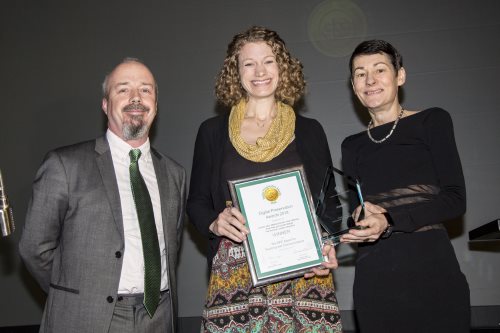 |
2018 Winner of the DPC Award for Teaching and Communications,
|
Anna Oates; University of Illinois at Urbana-Champaign
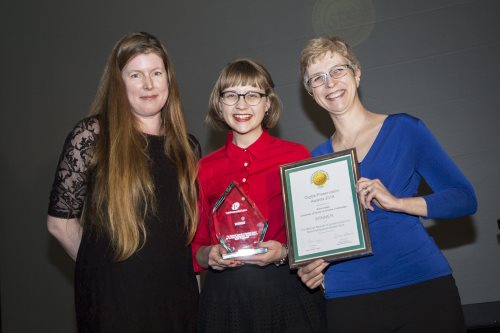 |
2018 Winner of the National Records of Scotland (NRS) Award for the Most Distinguished Student Work in Digital Preservation,
|
Crossrail and Transport for London; Archiving Crossrail
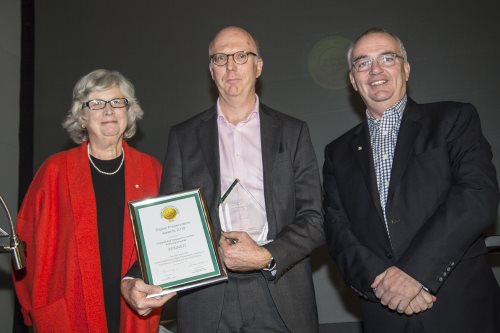 |
2018 Winner of the Open Data Institute (ODI) Award for the Most Outstanding Digital Preservation Initiative in Commerce, Industry and the Third Sector,
|
IFI Irish Film Archive; IFI Loopline Project
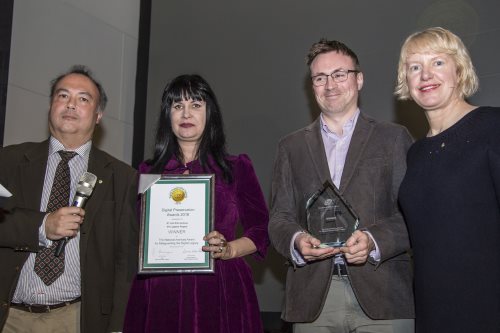 |
2018 Winner of the National Archives Award for Safeguarding the Digital Legacy, presented by Valerie Johnson, The National Archives and Neil JefferiesFrustrated by budget constraints & unresponsive commercial vendors the IFI Irish Film Archive was inspired by the FLOSS community to develop a suite of 55 open source scripts (IFIScripts) that support our digital preservation activities in a sustainable and efficient manner. Solving problems in-house has reduced our maintenance costs and vendor fees and allowed us to take control of our preservation workflows. Not only has IFIScripts helped us to fulfil our digital preservation remit within our limited staff and financial resources, but we sharing all our tools with the preservation community on Githib for others to use and adapt. We are currently completing our first end- to- end application of the IFI Scripts on a preservation projection for a collection of material from a leading Irish film production company called Loopline Films. Watch interview with Kasandra O'Connell and Kieran O'Leary Watch DPA2018 Winners Webinar on the IFI Irish Film Archive Loopline Project |
Barbara Sierman
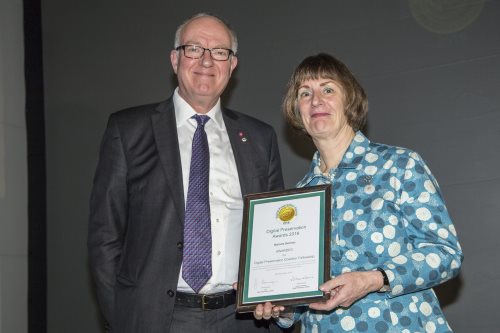 |
2018 Winner of the DPC Fellowship Award,
|
The Digital Preservation Awards 2018 Finalists
|
The Software Sustainability Institute Award for Research and Innovation
|
The DPC Award for Teaching and Communications
|
|
The National Records of Scotland Award for the Most Distinguished Student Work in Digital Preservation
|
The Open Data Institute Award for the Most Outstanding Digital Preservation Initiative in Commerce, Industry and the Third sector |
|
The National Archives Award for Safeguarding the Digital Legacy
In the category of 'Safeguarding the Digital Legacy' The judges also offered a special commendation to the GI Press Collection |
|
The DPC extends grateful thanks to our international panel of Judges and all of our sponsors who made the Digital Preservation Awards 2018 a possibility:
|
David Tarrant, |
Neil Chue Hong, |
Sheila Morrissey, |
|
John Sheridan, |
Neil Grindley, Jisc |
Steve Daly, BBC |
|
Karen Sampson, |
Neil Jefferies, |
Susan Reilly, |
|
Laura Molloy, |
Paul Wheatley, |
Tim Gollins, |
|
Marcel Ras, |
Sally McInnes, |
William Kilbride, |
|
Natalie Harrower, |
Sharon McMeekin, |
Digital Preservation Awards 2016
Watch the ceremony
Watch the Digital Preservation Awards ceremony, filmed live on 30th November 2016 at the Wellcome Collection, London.
Meet the Winners
NCDD and NDE, ‘Constructing a network of nationwide facilities together.’
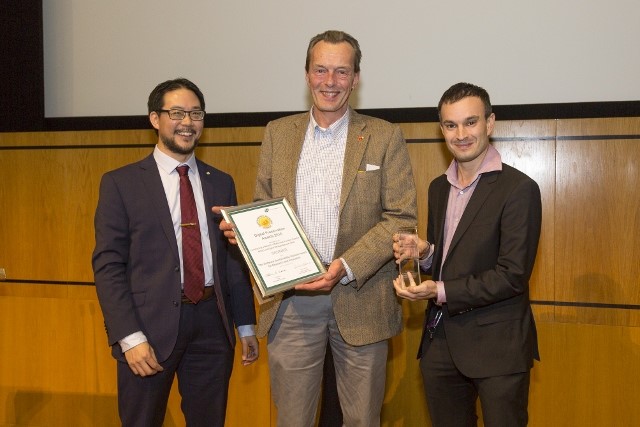 |
2016 Winner of the Software Sustainability Institute (SSI) Award for Research and Innovation,
|
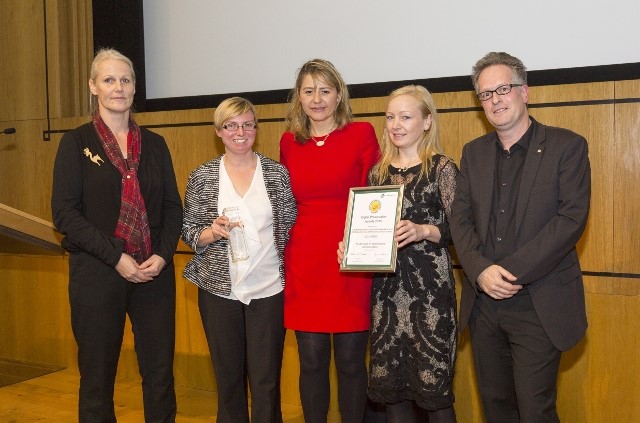 |
2016 Winner of the NCDD Award for Teaching and Communications,
|
Anthea Seles, University College London and ‘The Transferability of Trusted Digital Repository Standards to an East African context.
|
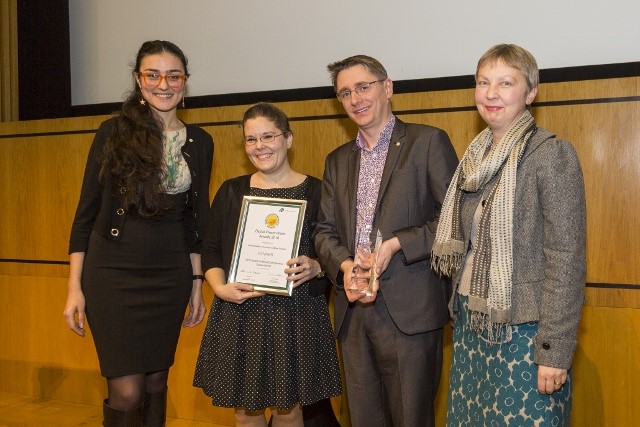 |
2016 Winner of the DPC Award for the Most Distinguished Student Work in Digital Preservation,
|
HSBC, ‘Global Digital Archive System (GDA)'
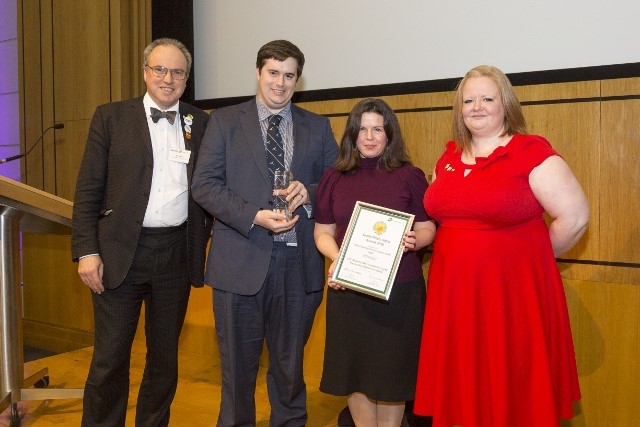 |
2016 Winner of the DPC Award for the Most Outstanding Digital Preservation Initiative in Industry,
|
Amsterdam Museum and Partners, ‘The Digital City revives: A case study of web archaeology.’
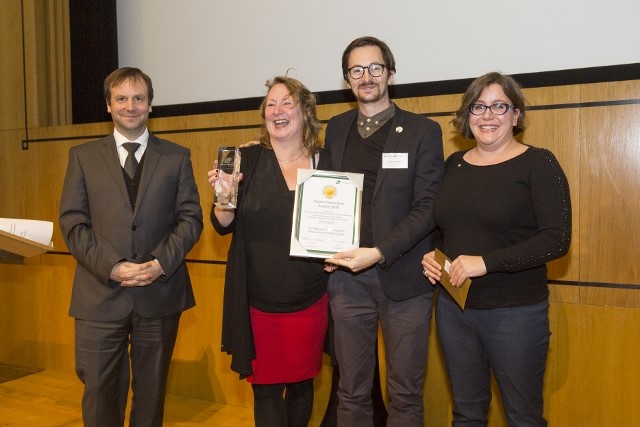 |
2016 Winner of the National Archives Award for Safeguarding the Digital Legacy,
|
Brewster Kahle, Internet Archive
|
|
2016 Winner of the DPC Fellowship Award,
|
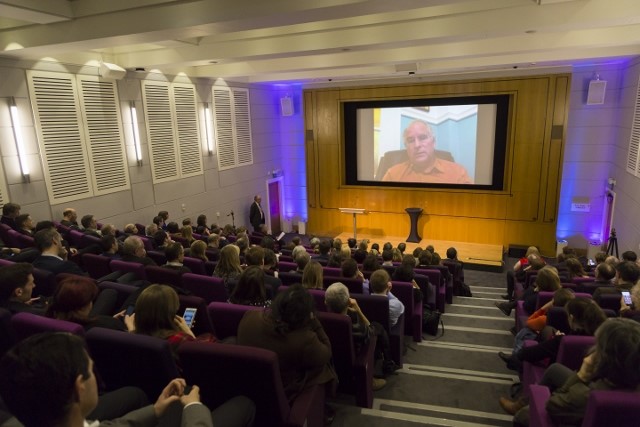
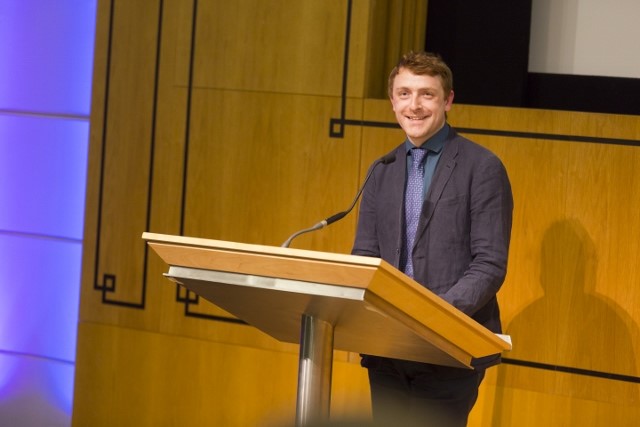
Digital Preservation Awards 2016 Finalists
|
Software Sustainability Institute Award for Research and Innovation
|
NCDD Award for Teaching and Communications
|
|
DPC Award for the Most Distinguished Student Work in Digital Preservation
|
DPC Award for the Most Outstanding Digital Preservation Initiative in Industry
|
|
The National Archives Award for Safeguarding the Digital Legacy
|
The DPC extends grateful thanks to our international panel of Judges and all of our sponsors who made DPA2016 a possibility:
|
Adrian Brown, |
Louise Lawson, |
Sandra Collins, |
|
Daniela Duca, |
Manuela Speiser, |
Sharon McMeekin, |
|
Dave Tarrant, |
Marcel Ras, |
Steve Daly, |
|
Dave Thompson, |
Maureen Pennock, |
Tim Gollins, |
|
Joachim Jung, |
Neil Chue Hong, |
William Kilbride, |
|
John Sheridan, |
Paul Wheatley, |
|
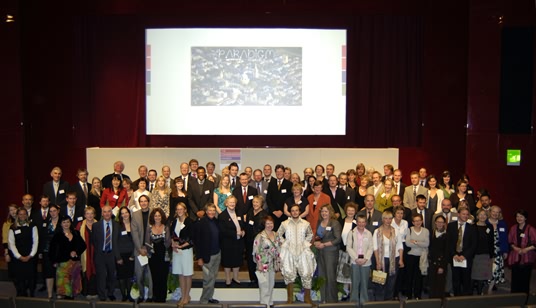
2007 Digital Preservation Award
Accolade for new tool to save digital archives for future generations as DROID wins the 2007 Digital Preservation Award.
An innovative tool to analyse and identify computer file formats has won the 2007 Digital Preservation Award. DROID, developed by The National Archives in London, can examine any mystery file and identify its format. The tool works by gathering clues from the internal 'signatures' hidden inside every computer file, as well as more familiar elements such as the filename extension (.jpg, for example), to generate a highly accurate 'guess' about the software that will be needed to read the file.
Identifying file formats is a thorny issue for archivists. Organisations such as the National Archives have an ever-increasing volume of electronic records in their custody, many of which will be crucial for future historians to understand 21st-century Britain. But with rapidly changing technology and an unpredictable hardware base, preserving files is only half of the challenge. There is no guarantee that today's files will be readable or even recognisable using the software of the future.
Now, by using DROID and its big brother, the unique file format database known as PRONOM, experts at the National Archives are well on their way to cracking the problem. Once DROID has labelled a mystery file, PRONOM's extensive catalogue of software tools can advise curators on how best to preserve the file in a readable format. The database includes crucial information on software and hardware lifecycles, helping to avoid the obsolescence problem. And it will alert users if the program needed to read a file is no longer supported by manufacturers.
PRONOM's system of identifiers has been adopted by the UK government and is the only nationally-recognised standard in its field.
The Digital Preservation Award of £5,000 is sponsored by the Digital Preservation Coalition. This prestigious Award recognises achievement and encourages innovation in the new and challenging field of digital preservation - simply put, preserving things whose very existence depends on computers. The judges chose The National Archives from a strong shortlist of five contenders, whittled down from the original list of thirteen.
Short-listed for the Digital Preservation Award were:
-
LIFE: The British Library.
LIFE (Lifecycle Information for E-Literature) has made a major contribution to understanding the long-term costs of digital preservation, an essential step in helping institutions plan for the future. Its methodology models the digital lifecycle and calculates the costs of preserving digital information for the next 5, 10 or 100 years. Organisations can apply this process to understand costs and focus resources on those items or collections most in need of them.
http://www.ucl.ac.uk/ls/life/1/conference.shtml -
Web Curator Tool software development project: National Library of New Zealand & The British Library.
The web is a huge and interconnected digital asset with which we are all familiar, and one in which material changes and disappears with frightening regularity. Conscious of this problem, the National Library of New Zealand and The British Library worked together in an international collaboration to build this tool, which supports selective and thematic web-harvesting by collaborating users in a library environment. Swift development over just 10 months enabled it to be released as free software for the benefit of the international web-archiving community in September 2006, from webcurator.sf.net.
http://webcurator.sourceforge.net/ -
Active Preservation at The National Archives - PRONOM Technical Registry and DROID file format identification tool: The National Archives of the UK.
One of the fundamental challenges of digital preservation is to understand the technologies required to access digital information, and plan the actions we will need to take to ensure continued access in the future in the face of constant technological change. Is the software needed to read this document still supported by the supplier, and is the format of this digital movie still readable by most computers? PRONOM is a unique and innovative online service which helps to answer questions like these and includes a knowledge base of technical information about over 600 file formats and 250 software tools, which has been developed by The National Archives to answer these challenges.
http://www.nationalarchives.gov.uk/aboutapps/pronom/puid.htm -
PARADIGM (The Personal Archives Accessible in Digital Media): Bodleian Library, University of Oxford, & John Rylands University Library, University of Manchester.
Personal archives are important components of cultural memory, but inexperience in curating their modern counterparts - e-mail, digital photographs, online calendars, blogs and many more - puts the survival of today's personal histories at risk. The diversity and volatility of digital technology far exceeds that of any medium that creators, archivists and researchers have previously worked with. The Paradigm project has worked with politicians, archivists and researchers to investigate these challenges in an exemplar project so that the archives of significant contemporaries can continue to enrich our history.
http://www.paradigm.ac.uk/ -
Digital Repository Audit and Certification: CRL, RLG-OCLC, NARA, the DCC, DPE and Nestor.
As the number of organisations, both public and private, preserving digital information increases, it becomes important to be able to assess how well they are doing and how well-prepared they are for the unknown challenges of the future. The Trustworthy Repositories Audit and Certification (TRAC) Criteria and Checklist (maintained by the US Center for Research Libraries), the nestor project's Criteria Catalogue and the Digital Repository Audit Method Based on Risk Assessment (DRAMBORA) published by the Digital Curation Centre and DigitalPreservationEurope present complementary methods for the self assessment, audit and certification of digital repository infrastructures.
http://www.repositoryaudit.eu/
The prestigious award was presented in a special ceremony at The British Museum on 27 September 2007 as part of the 2007 Conservation Awards, sponsored by Sir Paul McCartney.
Ronald Milne, Chair of the Board of Directors of the Digital Preservation Coalition, which sponsors the award, said: "The National Archives fully deserves the recognition that accompanies this award."
For more information on the two tools please see: the PRONOM Technical Registry and Digital Record Object Identification (DROID) file format identification.
2007 Judges
-
Kevin Ashley (Chair of the Judging Panel), Head of Digital Archives Department, University of London Computer Centre.
-
Michael Day, Research Officer at UKOLN, University of Bath.
-
Helen Hockx-Yu, Programme Manager, Joint Information Systems Committee (JISC).
-
William Kilbride, Research Manager, Glasgow Museums.
-
Andreas Rauber, Associate Professor, Department of Software Technology and Interactive Systems (IFS), The Vienna University of Technology.
-
Chris Rusbridge, Director, Digital Curation Centre (DCC).
-
Helen Shenton, Head of Collection Care, the British Library.
-
Dave Thompson, Digital Curator, Wellcome Library.