












































































































































Preserving ‘Research Objects’ - Challenges and Requirements
Preserving ‘Research Objects’ - Challenges and Requirements
Manuela Pallotto Strickland, Aberystwyth University, Department of Information Studies
 |
This master’s dissertation addresses the digital preservation challenges of ‘Research Objects’ (RO) through active research. ‘Research Objects’ are regarded as complete archival representations of scientific studies being ‘self‑contained’ and ‘self‑describing’. However, their ongoing execution relies on the implementation of web ontologies, linked data, and computational methods. ROs are widely used in scientific research to enable results to be captured, used, reused and exchanged. They encapsulate a whole scientific research study into a single ‘archive file’ for storage by repositories. However, the use of Semantic Technologies and the inclusion of executable artefacts expose them to previously unacknowledged preservation risks. This study conducted an exploratory/non‑confirmatory investigation into the digital preservation challenges presented by ROs. It describes the evolution of the RO data‑model before undertaking two case studies. These identify the significant properties and assess the technical, data and metadata dependencies of two ROs containing executable objects and implementing Semantic Technologies. It benchmarks these against three RO data models to identify the requirements for their use and reuse, taking into account the community they were created for (designated community) and the additional information and technologies that may be required to execute them (representation information). The study adopted a constructive research framework – one which solves practical problems ‑ and an instrumental collective case study strategy. It integrates these with a comprehensive literature review, The findings show that ROs have numerous external dependencies in the software, data, and metadata areas, including those engendered by ontologies, linked data, and containerisation technologies implemented as dependency‑management tools. Preservation challenges ensue from the unavailability of some of these external dependencies, although some challenges occur if the whole RO is preserved, rather than only the artefacts of the study it represents. These challenges are underscored by the need for a specialised knowledge base and information needs for their effective reuse, highlighting the requirement to closely define the ‘designated community’ who will need to reuse them. This study shows that, when ROs are considered as digital objects to preserve, their claim to be ‘self describing’ and ‘self‑contained’ records of research studies ready to be archived falters. ROs exhibit a proneness to preservation risks which has yet to be acknowledged and addressed. Closing such knowledge and practice gap is urgently needed, as the pace at which research technologies become obsolete is fast‑forward and relentless. |
This category is not included in the DPC Member vote.
The Award for the Most Distinguished Student Work in Digital Preservation follows a slightly different process, with the winner selected exclusively by the Awards Judges.
The ethical implications of introducing FRT into archival metadata description and catalogue search for photographic and audiovisual collections
The ethical implications of introducing FRT into archival metadata description and catalogue search for photographic and audiovisual collections.
Rosa Méthol, University of Liverpool
 |
This dissertation focuses on the ethical implications of introducing facial recognition technology (FRT) into archival metadata description and catalogue search for photographic and audiovisual collections. Relevant debates are informed by and relate to biometric recognition machine learning (ML) technologies more broadly, and discussion of these also features. The dissertation aims to explore how theory, combined with direct conversation with archivists, can progress ethical debates on this subject. It does so by analysing existing literature on the topic, as well as consulting working archivists via two focus group sessions involving five participants. In doing so, it synthesises theoretical writings with how these may manifest in practice, using the personal and professional views of archivists to kickstart an ethical archival debate that I hope will be picked up and continued by others. My findings demonstrate where current overlaps exist between theory and practice, for example that archives must remain considered and gradual with their adoption of new technologies, as well as where the two disagree with each other. For example, the dissertation explores clashes between a theoretical desire to open up collections further through the use of technology and practical restrictions around staffing and capacity, as well as the threats this could pose to privacy and consent processes if handled incorrectly. It begins to bridge a gap between theoretical and practical research approaches and demonstrates a model for future enquiry into the ethical question of what place FRT should have in archival metadata creation and searching. Key words: Machine learning (ML), artificial intelligence (AI), facial recognition technology (FRT), ethics, colonial legacies, decolonisation, algorithmic bias, photographic archives, audiovisual archives, privacy, access, hybrid intelligence, information retrieval, biometric information, explainable AI, dual-use technology. |
This category is not included in the DPC Member vote.
The Award for the Most Distinguished Student Work in Digital Preservation follows a slightly different process, with the winner selected exclusively by the Awards Judges.
The National Archives (UK) Award for Safeguarding the Digital Legacy

This award highly commends the practical application of preservation tools to protect at-risk digital objects. The prize in this category consists of a trophy to be retained by the recipient, certificates for participating individuals, and a cash prize of £1000 payable to the lead nominee’s organization.
Meet the finalists:
Data Rescue Project
 |
Nominee: Lynda Kellam, Halle Burns, Mikala Narlock, Lena Bohman, Kathleen Burlingame, Sebastian Majstorovic, Tess Grynoch, and Amy Nurnberger In early 2025, the new US presidential administration began removing or altering federal datasets at unprecedented speed and scale. In response, representatives from leading research data organizations launched the Data Rescue Project, a volunteer-led, community-driven effort to capture and preserve at-risk public data. In fourteen months, the DRP rescued nearly 3,000 datasets from 97 federal agencies, mobilized more than 500 volunteers, and ensured preserved data remains discoverable and accessible to researchers, journalists, and the public. Now developing a replicable playbook for future data rescue efforts worldwide, the DRP has demonstrated that protecting public data is both a technical and a human endeavor. |
The Tutankhamun Spatial Archive
 |
Nominee: Daniela Rosenow, Lara Bampfield, Francisco Bosch-Puche, Elizabeth Fleming, Jennifer Turner The Tutankhamun Spatial Archive transforms one of the world’s most important archaeological archives into a sustainable and accessible digital resource. Based on 20,000 excavation records from the discovery of Tutankhamun’s tomb, the project replaces an outdated legacy website with a modern, fully searchable database that connects documents, objects, people, and their original locations within the tomb. By preserving fragile documentation and enabling new ways to explore and understand the material, the archive supports research, teaching, and public engagement. It safeguards a unique cultural resource while establishing a new model for presenting complex archival collections in the digital age. |
Archive of Personal Testimonies: The Russian Invasion of Ukraine
 |
Nominee: Anna Eliseeva Archive of Personal Testimonies: The Russian Invasion of Ukraine is a public digital archive that preserves personal accounts of eyewitnesses to Russia's invasion of Ukraine, documenting life under occupation, bombardment, captivity, displacement, and loss. The collection is based on interviews recorded by The Helpdesk between 2022 and 2024 and originally published in fragmented form on social media. |
This category is sponsored by:
The Research Data Alliance Award for the Most Outstanding Digital Preservation Initiative in Commerce, Industry and the Third sector

This award celebrates the adoption of digital preservation tools and approaches in an organization that is not explicitly a memory institution. The prize in this category consists of a trophy to be retained by the recipient, certificates for participating individuals, and a cash prize of £1000 payable to the lead nominee’s organization.
Meet the finalists:
GOG Preservation Program
 |
Nominee: Good Old Games (GOG) The GOG Preservation Program is a systematic effort by GOG, a PC digital distribution platform, to maintain playability of classic video games on current and future gaming systems. Since its public launch in November 2024, the program has grown to cover 267 titles, with over 1,400 applied fixes, improvements, and, whenever possible, restored content. Each title undergoes dedicated technical work — from custom DirectX wrapping to installer rebuilds — backed by a long-term commitment to ongoing maintenance. GOG also contributes to broader industry preservation efforts through its EFGAMP board membership and public advocacy, including a dedicated game preservation panel at GDC 2026. |
LDF Recollection: Innovating a Civil Rights Archive
 |
Nominee: NAACP Legal Defense Fund Archives Team The NAACP Legal Defense Fund (LDF) is a nonprofit law firm spearheading the fight for civil rights since 1940. In Fall 2024, the Archives Team launched LDF Recollection, a public digital repository containing over 13,000 institutional records. Our mission is to steward and share this collection documenting the historic and ongoing struggle for civil justice and political, educational, and economic equity. With our partners at Durable Digital, we have innovated a digitization workflow supporting the unique preservation and security needs of a legal civil rights archive by integrating Recollection with archival software and a customer relations management database. |
Diageo Archive AI Cataloguing Assistant Application
 |
Nominee: Alice McFarlane, Diageo Archive The Diageo Archive AI Cataloguing Assistant application is an Azure-hosted prototype that automates and embeds preservation-aware metadata creation, validation, and quality control into archive cataloguing workflows. It improves metadata consistency, reduces manual effort, and strengthens the long-term accessibility and usability of born-digital and digitised heritage assets. Combining OCR, image analysis, structured metadata mapping, and human quality assurance, it enables scalable, auditable cataloguing while retaining archivist oversight. The initiative demonstrates how AI can support responsible digital preservation in a commercial context by reducing risk, improving data quality, and enabling sustainable management and automation of digital collections at scale. |
This category is sponsored by:

The Award for the Most Distinguished Student Work in Digital Preservation

This award encourages and recognizes student work in digital preservation. The prize in this category consists of a trophy to be retained by the recipient’s institution, certificates for participating individuals, and a travel grant contributing to the costs of attendance at an international conference in 2027.
Meet the finalists:
A Digitisation Strategy For Cornish Historical Sources
 |
Nominee: Alice Thacker, studying at King's College London This dissertation submitted for the MA in Digital Humanities examines how a digitisation strategy for Cornish historical sources could support future discourse around Cornish distinctiveness, particularly through cultural preservation, public access, research, education, and the Cornish language revival. Focusing on materials held by Kresen Kernow and related Cornish cultural institutions, the study argues that these sources are not only archival records but active resources for strengthening understanding of Cornwall’s recognised minority status, language heritage, and cultural identity. Many important manuscripts, maps, records, photographs, and multilingual texts remain accessible only through physical archive visits, limiting their value for local communities, researchers, educators, and wider global audiences. |
Preserving ‘Research Objects’ - Challenges and Requirements
 |
Nominee: Manuela Pallotto Strickland, studying at Aberystwyth University |
The ethical implications of introducing FRT into archival metadata description and catalogue search for photographic and audiovisual collections
|
Nominee: Rosa Méthol, studying at University of Liverpool This dissertation examines the ethical implications of using facial recognition technology (FRT) in archival metadata creation and catalogue search for photographic and audiovisual collections. Combining a review of existing literature with focus groups involving five archivists, it explores how ethical concerns around biometric recognition technologies are understood in both theory and practice. The findings highlight areas of agreement, such as the need for cautious technology adoption, and areas of tension, including conflicts between improving access to collections and protecting privacy, consent, and limited institutional resources. The study bridges theoretical and practical perspectives and offers a framework for future debate on FRT in archives. |
The KB National Library of the Netherlands Award for Teaching & Communications

This award distinguishes excellence in outreach, training and advocacy. The award includes a cash prize of £1000, a trophy and certificates.
Meet the finalists:
Brazilian Training Program in Digital Preservation
 |
Nominee: Miguel Angel Mardero Arellano The Brazilian Training Program of the Cariniana Network aims to offer open and advanced courses that address essential aspects of digital preservation. The program's main objective is to provide students with an in-depth understanding of the fundamental concepts of digital preservation. The program's structure and the active participation of researchers from the DRÍADE Research Group consolidate a continuous learning ecosystem, promoting specialized and accessible training for professionals from diverse fields. The modular approach and synchronous interaction enabled not only the transmission of technical knowledge but also the exchange of experiences and the development of proposals applicable to the realities of the participating institutions. |
Digital Archives Program Workshop
 |
Nominee: Dylan Bremner Dylan Bremner, Digital Archivist at the City of Edmonton Archives in Canada, has supported his professional association, the Archives Society of Alberta, by sharing his expertise with the archival community. He developed and taught a Digital Archival Program Workshop which gave small archives throughout the province knowledge on how to start a digital archives program and to digitize/migrate and preserve tape cassettes, VHS and optical discs. The workshop simplified complex technical concepts and archival theories for participants who are not formally trained in the archival profession. The training has provided small archives with capacity to begin programs for digital archives. |
Digital Ghosts - Visualising Scotland's Web Archives
 |
Nominee: Dr Andrea Kocsis Digital Ghosts is a practice-based research project with a huge impact and an even bigger heart. Centred on a public exhibition at Inspace Gallery, Edinburgh, it used creative visualisations and data-physicalisation artworks built from the Scotland on the Internet collection of the UK Web Archive, curated at the National Library of Scotland, to engage non-specialist audiences with web preservation. The project asked how visualising messy, fragmented GLAM metadata can communicate the scale of web decay, and how this creative approach can facilitate the use of web archives by exposing the heroic web preservation efforts. |

The National Library and Archives Board, Singapore Award for Research & Innovation

This award acknowledges exceptional contributions to practical research and innovation activities. The prize in this category consists of a trophy to be retained by the recipient, certificates for participating individuals, and a cash prize of £1000 payable to the lead nominee’s institution.
Meet the finalists:
Transcripción y difusión de la documentación manuscrita del archivo municipal de La Nucía mediante el uso de inteligencia artificial / AI-Enabled Transcription and Dissemination of Handwritten Documents from the Municipal Archive of La Nucía
 |
Nominees: Archivo Municipal de La Nucía The La Nucía Municipal Archive project uses artificial intelligence to make historical handwritten documents accessible to everyone. Over 30,000 pages have been digitised, and 10,000 pages—mainly council minute books dating back to the 18th century—have been automatically transcribed using advanced technology. This allows users to read and search documents that were previously difficult to understand. A new, user-friendly website provides open access to this material, benefiting citizens, students, and researchers alike. The project transforms a traditional archive into a modern, searchable resource, helping people connect with their local history in an easy and meaningful way. |
EOSC EDEN Core Preservation Processes (CPPs)
 |
Nominees: Micky Lindlar, Bertrand Caron, Juha Lehtonen, Maria Benauer, Johan Kylander, Kris Dekeyser, Matthew Addis, Mattias Levlin, Mikko Laukkanen, Felix Burger, Tiina Koho, Franziska Schwab, Laura Molloy, Fen Zhang Digital Preservation knows many processes - but what do these processes look like? And where can institutions that are planning to grow their digital preservation capability find reference process descriptions? Until recently, such a point of reference was missing. The Core Preservation Processes (CPPs) are a set of 30 processes that every digital archive should undertake, either by itself or through an associated service. Identified and described within the EOSC EDEN project, they aim to provide practical implementation guidance for digital preservation processes and workflows. |
An OAIS-Compliant Archiving Platform with DNA Connector within OLOS
 |
Nominees: Pierre-Yves Burgi, Hugues Cazeaux, Dario Genga, Michaël El Kharroubi, Florient Serex, Jérôme Charmet This nomination focuses on a DNA-based archival storage system within OLOS.swiss, an OAIS-compliant preservation system. A connector enables both the encoding of archives into DNA, and communication with a micro-factory that performs all the genomic processes necessary for the storage and retrieval of the archives. Preliminary experiments demonstrate the successful encoding/decoding of megabyte-scale files, despite high error rates associated with DNA-related processes. This work contributes to the autonomous DNA data storage by demonstrating its integration into an OAIS-compliant long-term preservation system, showing that DNA preservation can function as a production platform and no longer merely as a laboratory proof-of-concept. |
This category is sponsored by:
The International Council on Archives Award for Collaboration and Cooperation

This award celebrates significant collaboration across institutional, professional, sectoral and geographical boundaries which have had a demonstrable and positive impact on digital preservation. The award includes a cash prize of £1000, a trophy and certificates.
Meet the finalists:
From Basement to Citizen: An Integrated Approach to the Digitisation, Preservation and Access to Environmental Permits
 |
Nominees: Sofie Ruysseveldt and Ruben Van Driessche (Digital Archives Flanders) This initiative provides local authorities in Flanders (Belgium) with a practical blueprint for managing environmental permit files in a fully digital way. By combining a framework agreement for digitisation with sustainable archiving and access, it treats digitisation, preservation and reuse as one coherent chain. Through direct integration between permit management software and the Digital Archives Flanders (DAV) E‑depot, archiving is embedded in daily administrative processes (archiving by design). Using shared services and existing Flemish digital building blocks, the project reduces complexity for local authorities while ensuring reliable preservation and accessible permit information for public servants, citizens and other stakeholders. |
Future Nostalgia: Safeguarding the knowledge of floppy disks
 |
Nominee: Leontien Talboom (Cambridge University Library) Future Nostalgia: Safeguarding the knowledge of floppy disks grew out of practical challenges encountered while working directly with legacy media at Cambridge University Library. Faced with limited guidance and uncertainty around best practice, the project set out to capture and share the knowledge needed to work confidently with floppy disks. Through collaboration with practitioners, conservators, and retro-computing communities, it developed the open-access Copy That Floppy! Guide. The project brings together hands-on experience, community knowledge, and experimentation to support others facing similar challenges, helping ensure that the data stored on obsolete media can still be preserved and accessed. |
IIM Africa Digital Preservation Capacity Building and Collaboration Initiative
 |
Nominees: Institute of Information Management (IIM) Africa The Institute of Information Management (IIM) Africa has advanced digital preservation across Africa through large-scale training, certification, and cross-border collaboration. By integrating digital archiving, data governance, and data protection into professional development programs, IIM has equipped professionals and institutions with the skills to safeguard digital assets for long-term access. Through partnerships spanning multiple countries and sectors, the initiative has strengthened capacity, supported policy development, and enabled sustainable digital preservation practices in emerging economies, addressing critical gaps in digital continuity and information resilience. |
Digital Preservation Awards 2024
Watch the Ceremony
In an exciting finale to the Digital Preservation Awards 2024, organisations and practitioners of digital preservation from around the world gathered together for a glittering presentation ceremony on Monday 16th September 2024, at the iPRES 2024 conference in Ghent, Belgium! Watch the ceremony now:
See photos from the awards ceremony
Meet the Winners
Collaborative models of care: preserving Australian First Nations digital cultural heritage
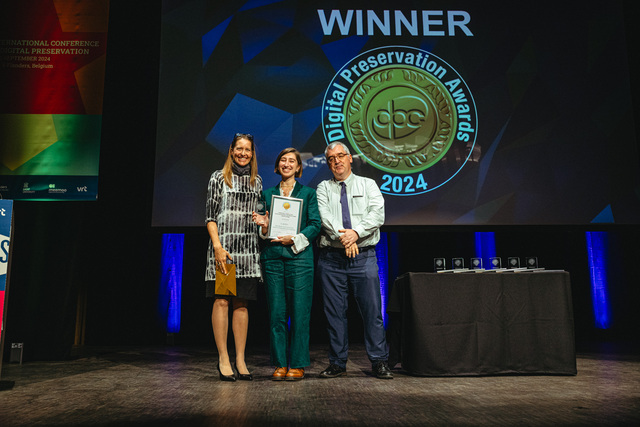 |
2024 Winner of the International Council on Archives Award for Collaboration and Cooperation
|
Improving access to and sustainability of the Pacific and Regional Archive for Digital Sources in Endangered Cultures (PARADISEC)
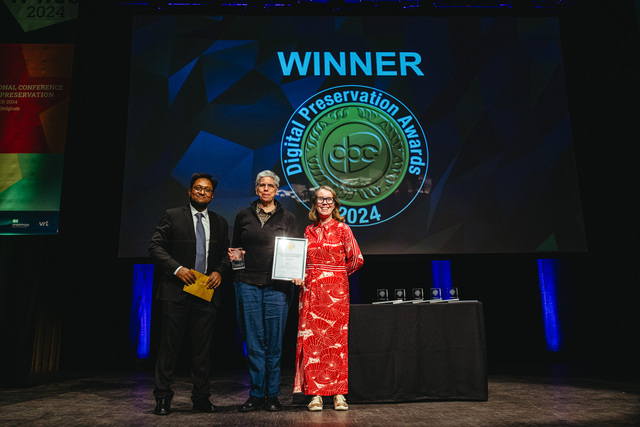 |
2024 Winner of the Digital Repository of Ireland (DRI) Award for Research and Innovation
|
Study group Bits and Bots for building digital skills
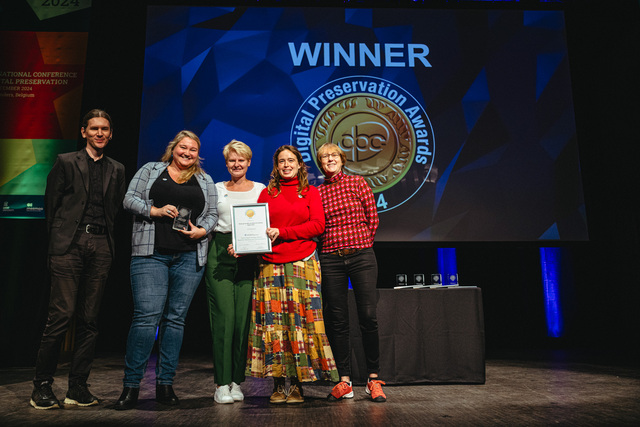 |
2024 Winner of the Dutch Digital Heritage Network Award for Teaching and Communications
Bits and Bots is a study group teaching digital archivists coding skills, currently focussing on Python and front-end development. The group is open to all and everyone, including the organisers, are learning together as a community instead of in isolation. Digital skills are increasingly important to digital preservation and it is not surprising that “Computer Programming” is listed as one of the skill elements in the Digital Preservation Coalition’s Framework. Coding can be daunting, Bits and Bots tackles this challenge, making learning fun by teaching coding through the creation of games. The community consists of 47 members from 5 continents.
|
Claudia Muñoz with Preservación de documentos digitales: el caso de Wikimedia México / Preservation of digital records: the case of Wikimedia Mexico
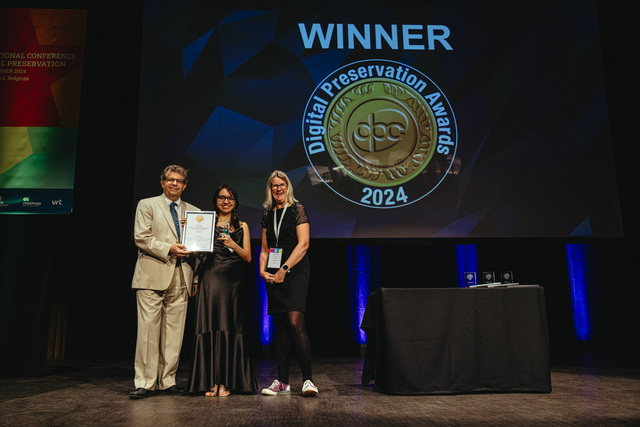 |
2024 Winner of the CLOCKSS Award for the Most Distinguished Student Work in Digital Preservation
|
NHS research records: Reducing Risk
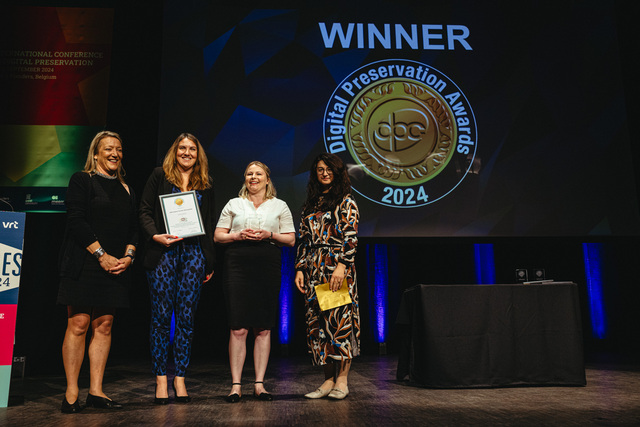 |
2024 Winner of the Research Data Alliance Award for the Most Outstanding Digital Preservation Initiative in Commerce, Industry and the Third Sector
|
DDLD – Living Archive
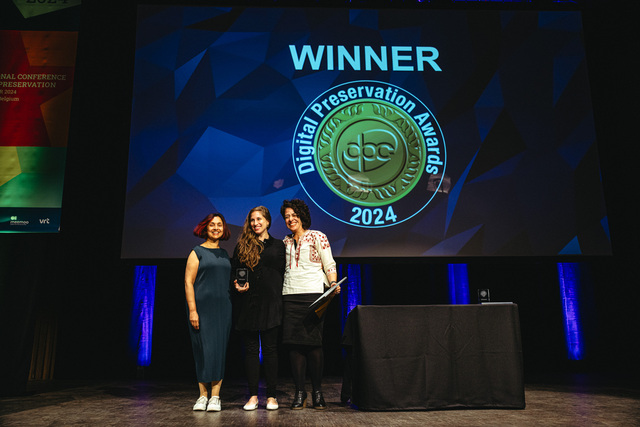 |
2024 winner of the The National Archives (UK) Award for Safeguarding the Digital Legacy
|
Gladys Kemboi
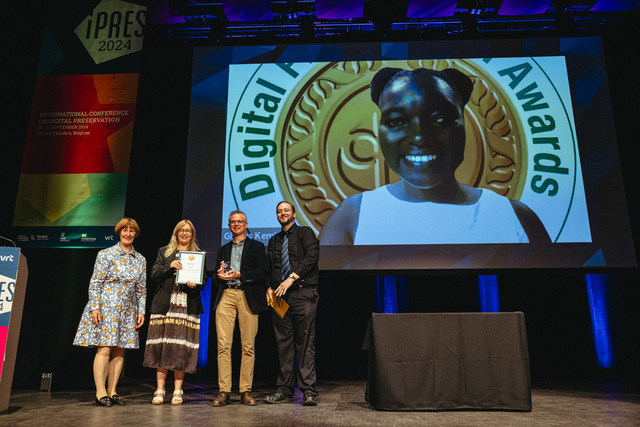 |
20244 Winner of the DPC Fellowship Award
|
Find out more about all of the Digital Preservation Awards 2024 Finalists
|
ICA Award for Collaboration and Co-operation:
|
Digital Repository of Ireland Award for Research and Innovation:
|
|
|
|
||
|
Dutch Digital Heritage Network Award for Teaching and Communications:
|
The CLOCKSS Award for the Most Distinguished Student Work:
|
|
|
|
|
|
|
The National Archives (UK) Award for Safeguarding the Digital Legacy:
|
RDA Award for the Most Outstanding Digital Preservation Initiative in Commerce, Industry and the Third sector:
|
|
|
|
|
The DPC would like to thank our international panel of judges and all sponsors for their continued support in ensuring the Digital Preservation Awards can continue to recognise and celebrate achievements in the field of digital preservation.
|
Matthew Burgess State Library of New South Wales |
Hilary Hanahoe, |
April Miller World Bank Group |
Marjolein Steeman Netwerk Digitaal Erfgoed / |
|
Gustavo Castener Marquardt International Council on Archives |
Haliza Jailani National Library Board Singapore |
Jenny Mitcham DPC |
Nathan Tallman Academic Preservation Trust |
|
Fatima Darries University of South Africa (UNISA) |
William Kilbride DPC |
Jo Ana Morfin Memórica - |
Melissa Terras University of Edinburgh |
|
Mihaiela Donisa Bank for International Settlements |
Nicola Laurent Australian Society of Archivists |
Sonia Ranade The National Archives UK |
Heather Tompkins Library and Archives Canada / |
|
Lisa Griffith Digital Repository of Ireland (DRI) |
Thomas Ledoux Bibliothèque nationale |
Arif Shaon Qatar National Library |
Jessica Venlet National Digital Stewardship Alliance / |
|
Gali Halevi CLOCKSS |
Roxana Maurer Bibliothèque Nationale |
Barbara Sierman |
Jaye Weatherburn University of Melbourne |
Digital Preservation Awards 2022
Watch the Ceremony
In an exciting finale to the Digital Preservation Awards 2022, organisations and practitioners of digital preservation from around the world gathered together for a glittering presentation ceremony on Monday 12th September 2022, at the iPres 2022 conference! Watch the ceremony now:
Meet the Winners
ARCHIVER Project
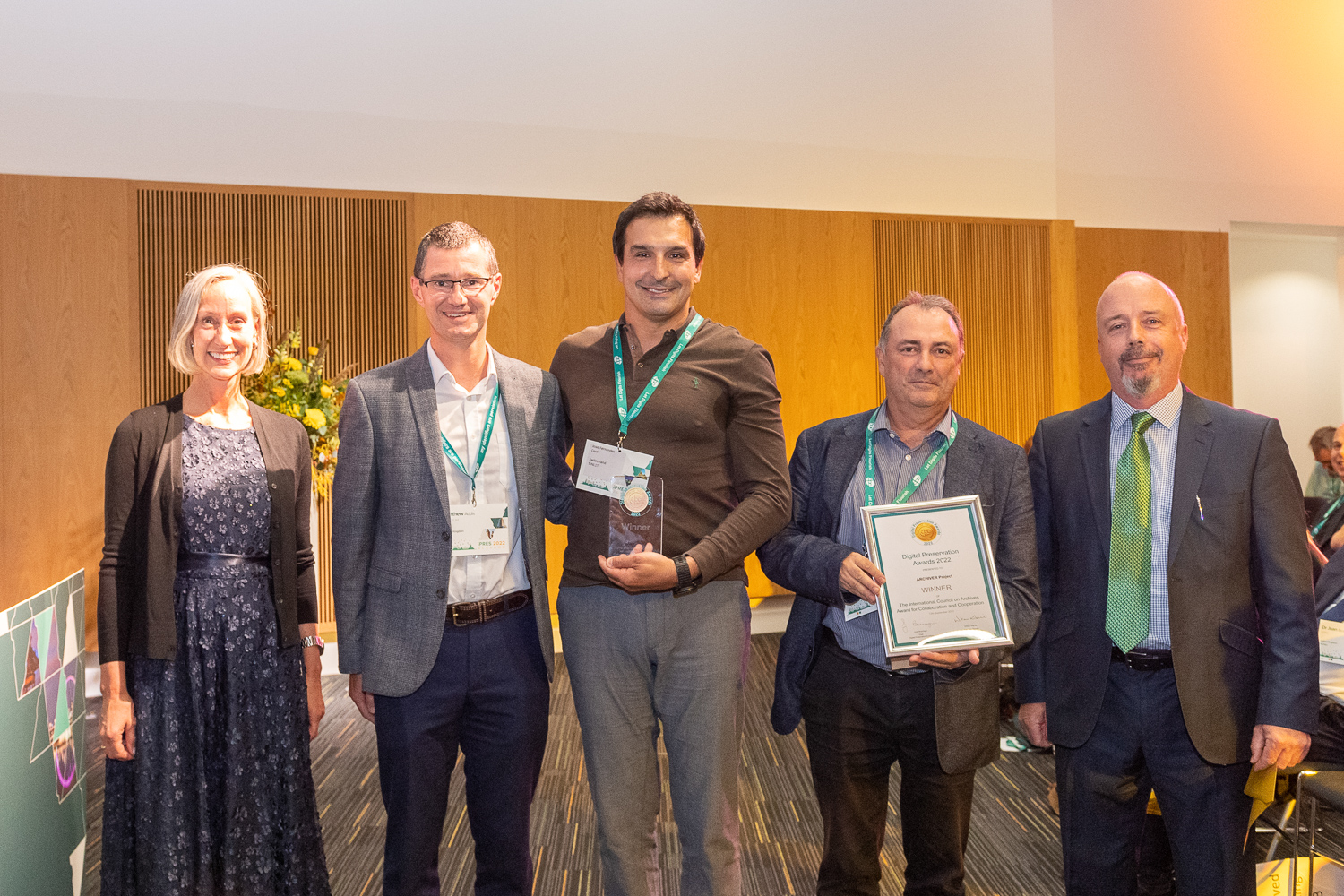 |
2022 Winner of the International Council on Archives Award for Collaboration and Cooperation
|
The effective preservation of archaeological virtual reconstructions
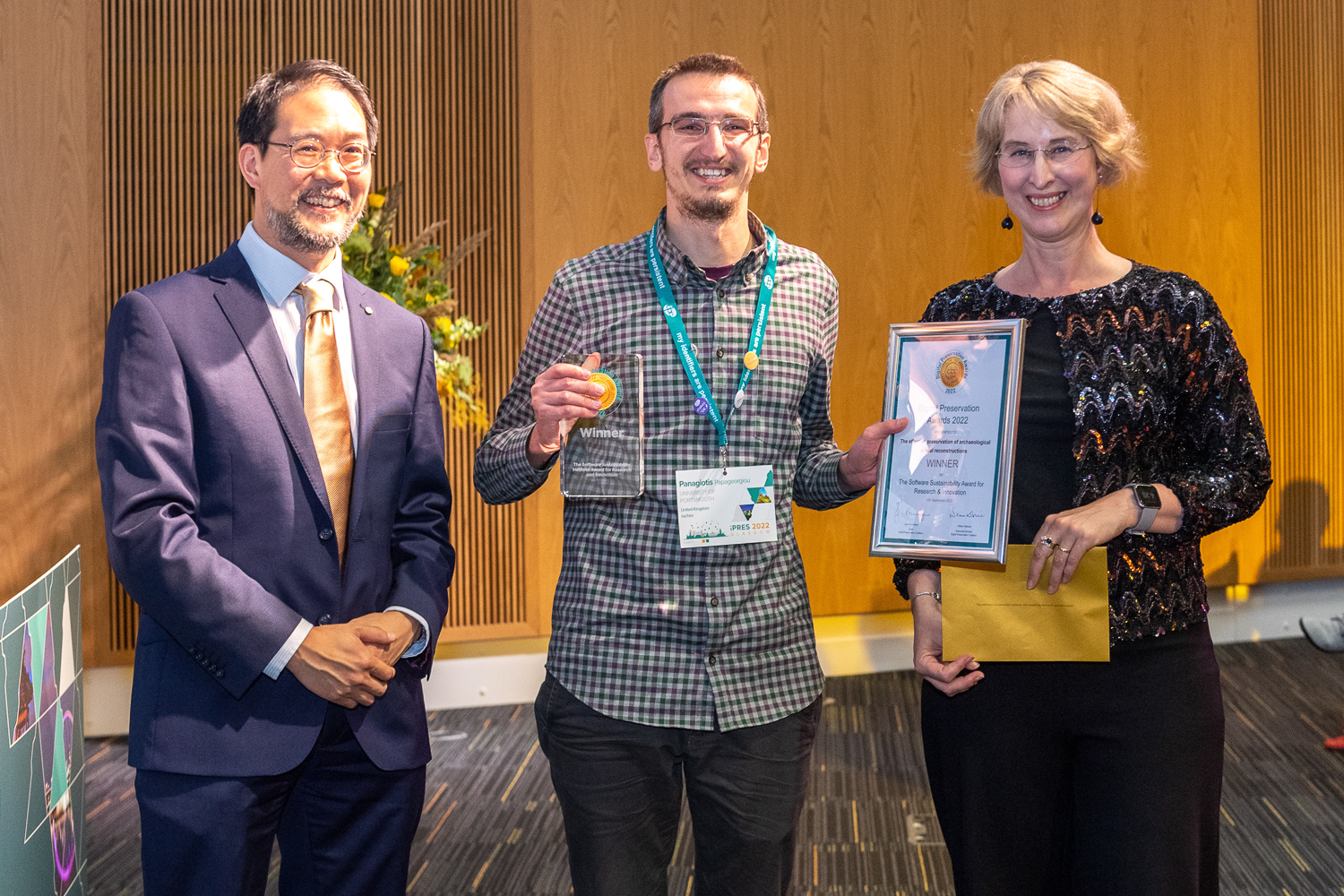 |
2022 Winner of the Software Sustainability Institute (SSI) Award for Research and Innovation
|
Learning through doing: building digital preservation skills in Wales
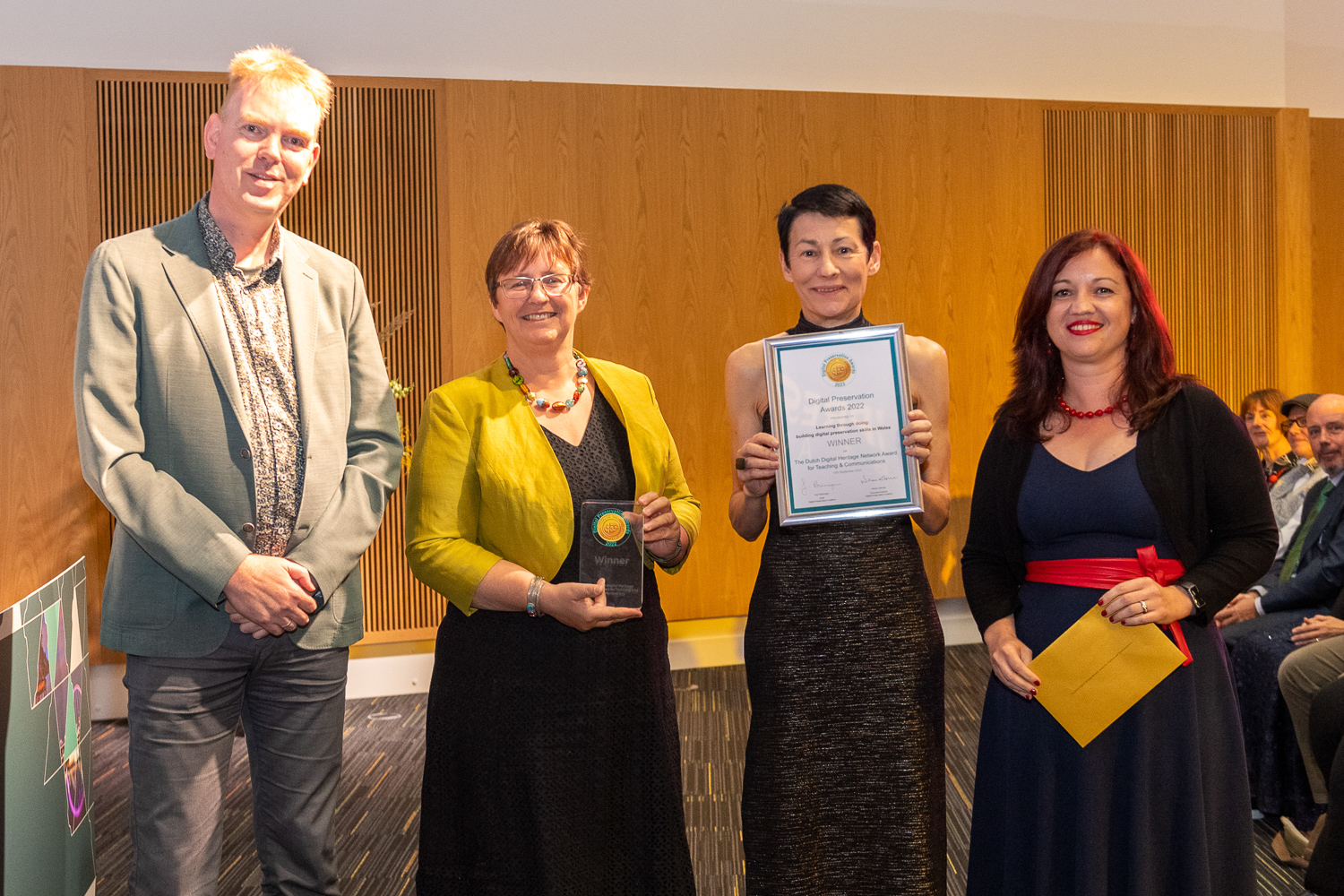 |
2022 Winner of the Dutch Digital Heritage Network Award for Teaching and Communications
|
sasha arden with 'Access to Artistic Content on CD-ROMs'
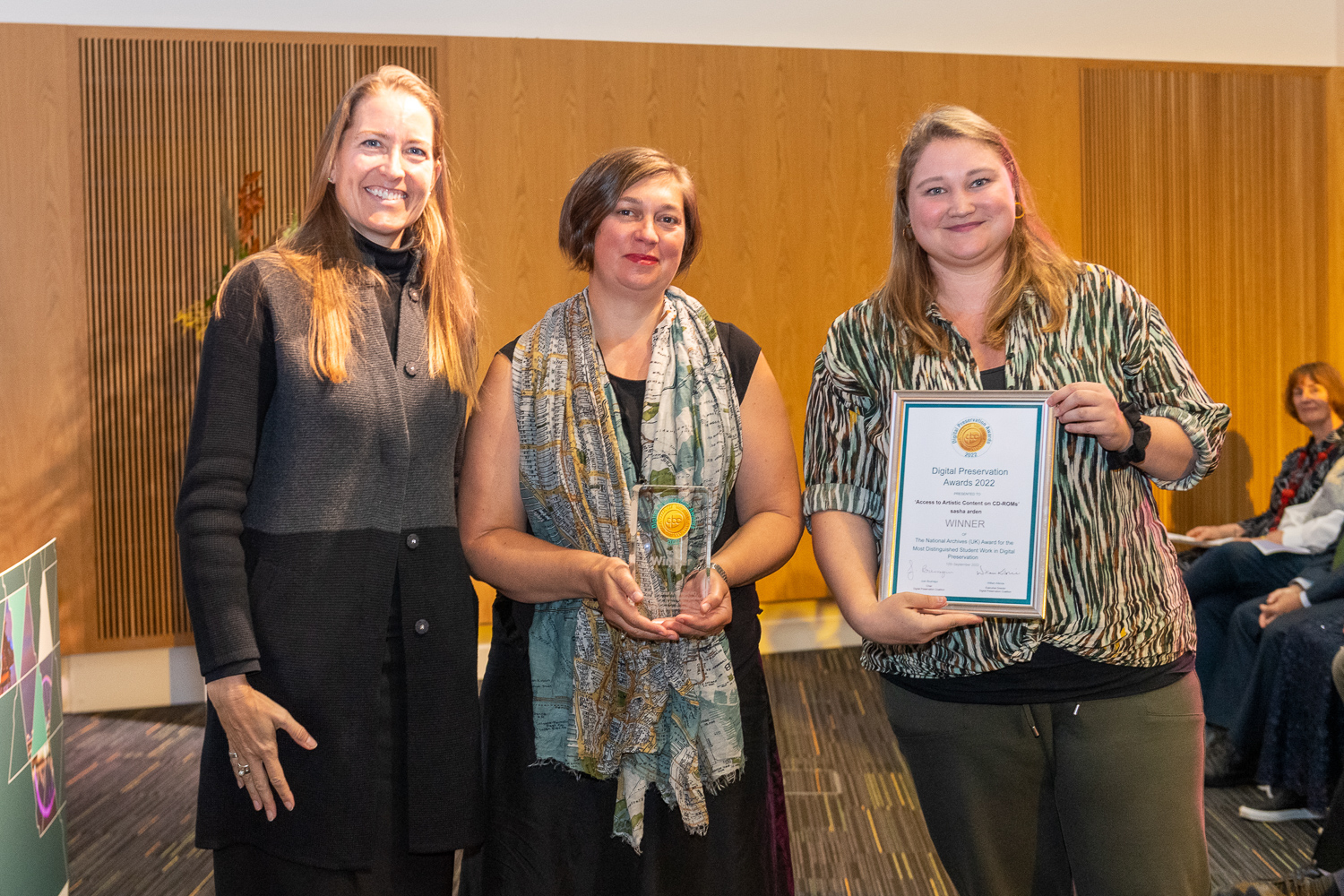 |
2022 Winner of the The National Archives (UK) Award for the Most Distinguished Student Work in Digital Preservation
|
National Centre for Truth & Reconciliation Digital Preservation Program
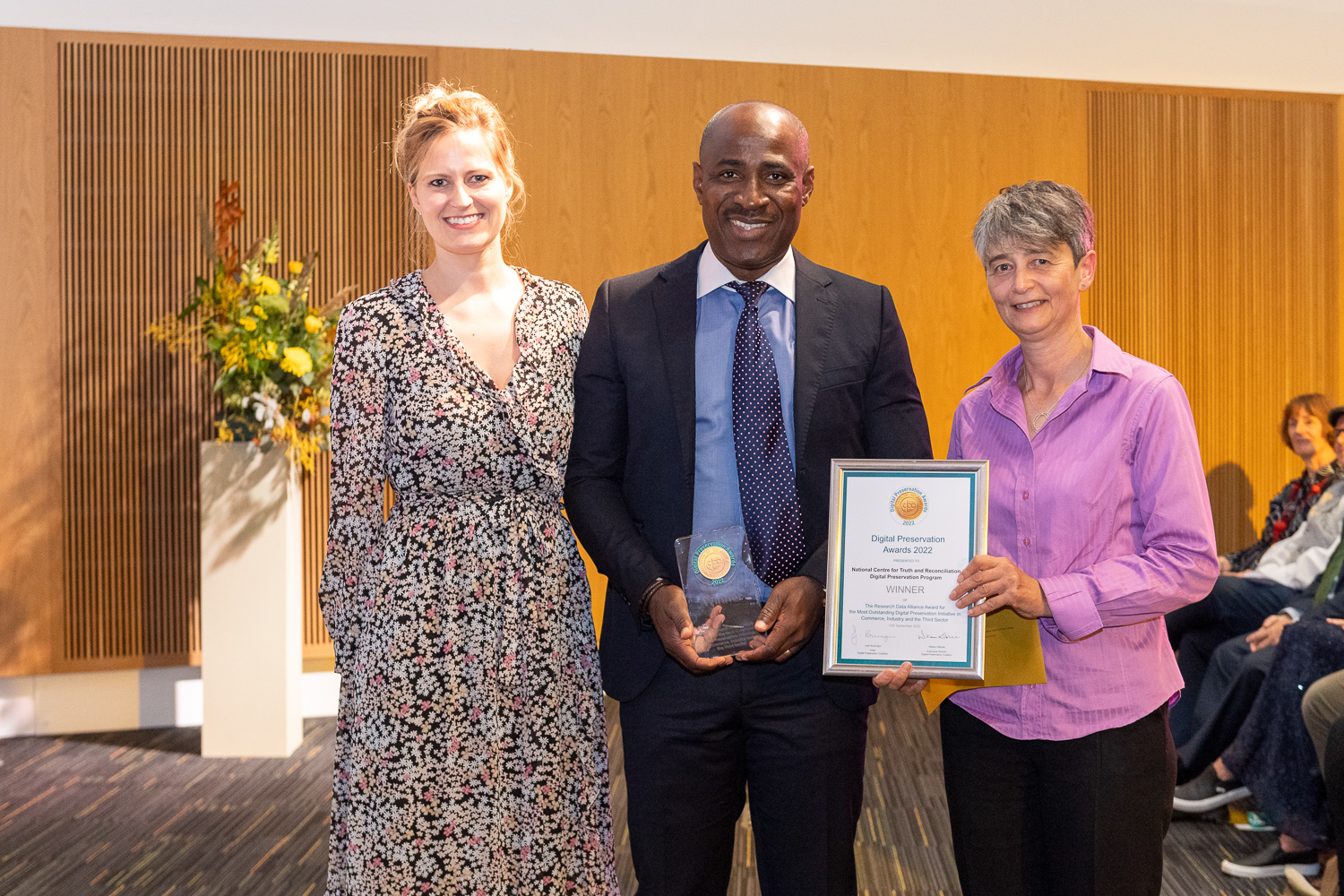 |
2022 Winner of the Research Data Alliance Award for the Most Outstanding Digital Preservation Initiative in Commerce, Industry and the Third Sector
|
Archiving Reproductive Health
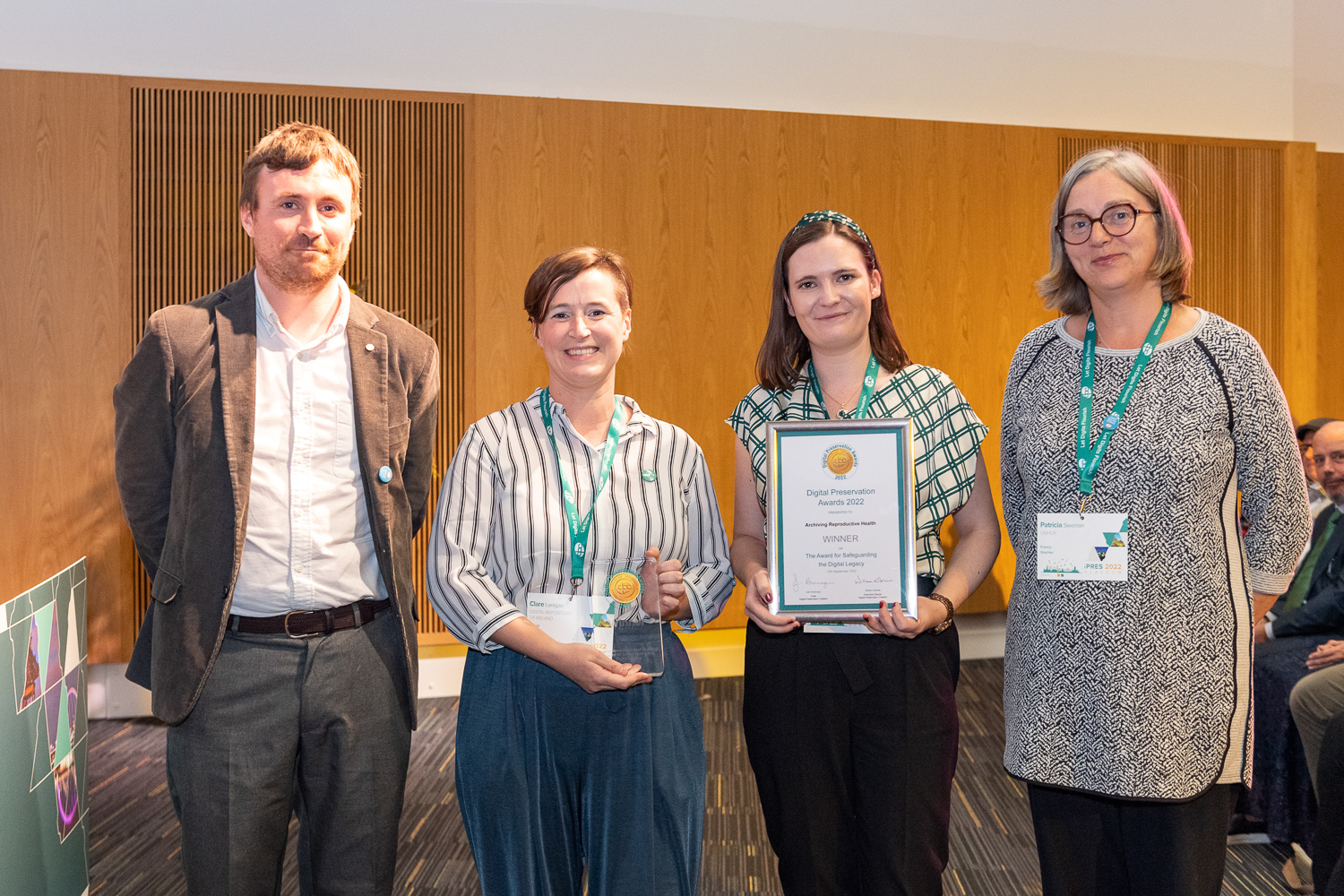 |
2022 winner of the Award for Safeguarding the Digital Legacy
|
PREMIS Data Dictionary and related resources
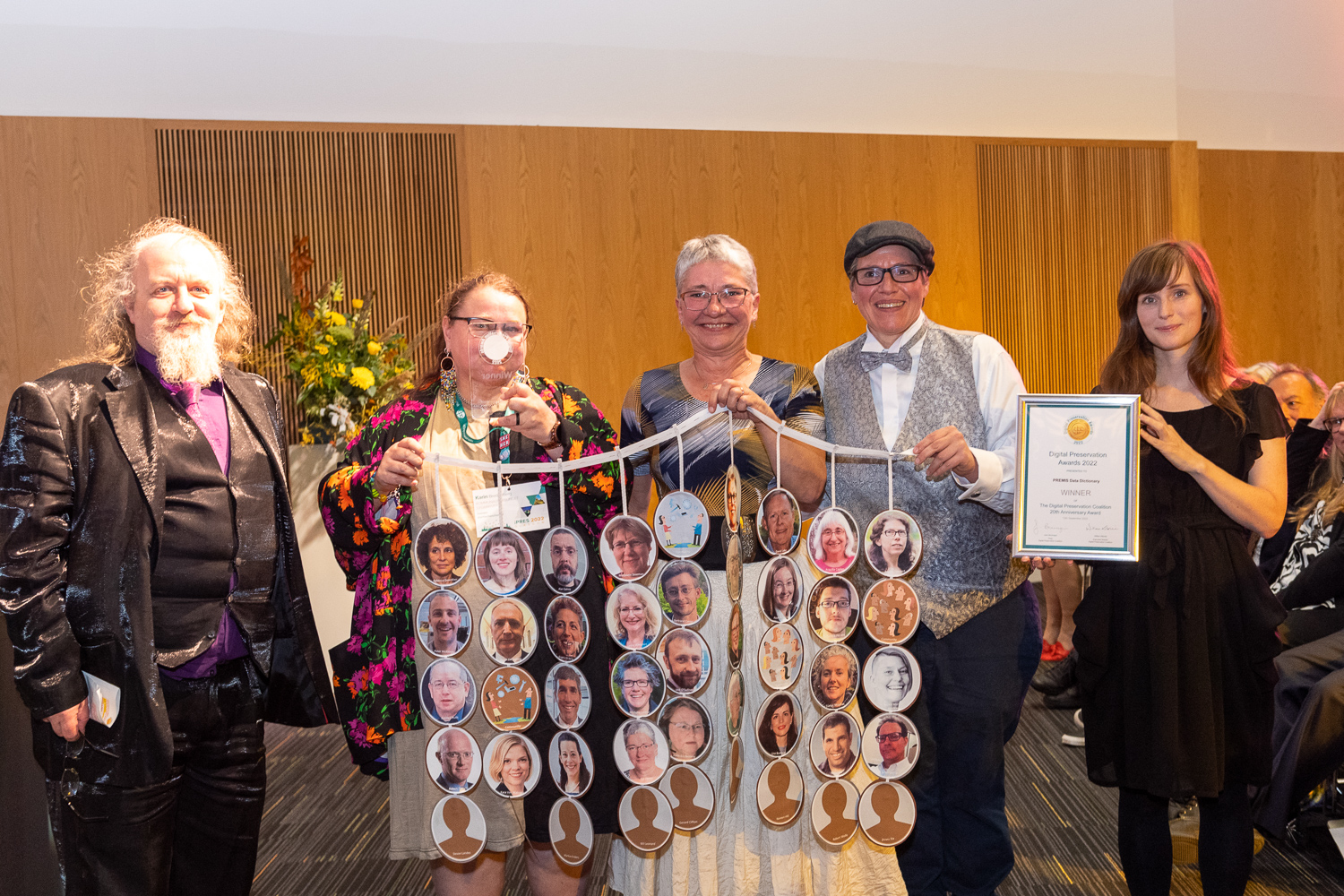 |
2022 winner of the DPC 20th Anniversary Award
|
Neil Beagrie, Adrian Brown, Dr. Denise de Vries, Nancy Y McGovern, Prof. Zhang Xiaolin
 |
2022 Winners of the DPC Fellowship Award
|
Find out more about the Digital Preservation Awards 2022 Finalists
|
ICA Award for Collaboration and Co-operation:
|
Software Sustainability Institute Award for Research and Innovation:
|
|
|
|
|
|
|
Dutch Digital Heritage Network Award for Teaching and Communications:
|
The National Archives (UK) Award for the Most Distinguished Student Work:
|
|
|
|
|
|
|
Award for Safeguarding the Digital Legacy:
|
RDA Award for the Most Outstanding Digital Preservation Initiative in Commerce, Industry and the Third sector:
|
|
|
|
|
|
|
The DPC 20th Anniversary Award:
|
|
|
|
|
|
The DPC would like to thank our international panel of judges and all sponsors for their continued support in ensuring the Digital Preservation Awards can continue to recognise and celebrate achievements in the field of digital preservation.
|
Gabriela Andaur Gomez, |
Hilary Hanahoe, |
Roxana Maurer, |
Meg Phillips, |
|
Angela Beking, |
Natalie Harrower, |
Kari May, |
Sonia Ranade, |
|
Adam Bell, |
Haliza Jailani, |
April Miller, |
Karen Sampson, |
|
Neil Chue Hong, |
Neil Jefferies, |
Jenny Mitcham, |
Remco van Veenendaal, |
|
Neil Grindley, |
William Kilbride, |
Laura Molloy, |
Niklas Zimmer, |
|
Abbie Grotke, |
Kirsty Lingstadt, |
Sheila Morrissey |
|