



































































































Blog
Unless otherwise stated, content is shared under CC-BY-NC Licence
Aberystwyth University - Recent Student Research in Digital Preservation
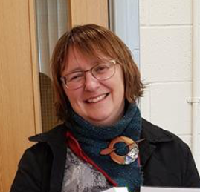
Sarah Higgins is a Lecturer and the Department Director of Recruitment & Admissions at the Department of Information Studies at Aberystwyth University
Today is Dydd Gŵyl Dewi Sant or Saint David’s Day in Wales – a national celebration to mark the death in 589 A.D. of our patron saint. It also marks exactly 11 years since my family, and I, left my native Scotland to make Wales our home. A journey of discovery both personally and professionally, I quickly felt at home in our village, Aberystwyth University’s Department of Information Studies and the wider information professional community in Wales.
One of my remits since joining the Department has been to develop and deliver education in digital information management, and in particular digital preservation. This has been a challenging and satisfying role, involving the development and delivery of assessed modules and full degree schemes at both undergraduate and master’s level, while embedding digital preservation into the curriculum across all our accredited courses (CILIP and/or ARA)[i]
However, one of the most rewarding aspects of the role is supervising student research projects on digital preservation themes. In undertaking their master’s dissertations and research degrees the students choose their own topics based on interests developed during their studies and are guided by supervisors to develop robust research aims and objectives, collect new data and make unique conclusions to further the discipline. The students bring imagination, energy, and new ways of exploring old problems to their projects, and on this day of national celebration, it would seem fitting to highlight some recently completed and ongoing digital preservation research, at Wales’s oldest university, to the international community.
Three students have concentrated on issues surrounding national record-keeping in the context of international developments in technology and digital preservation.
Ingest scheduling for DAMS at LSE: blending technical and curatorial input

Fabiana Barticioti is Digital Assets Manager at LSE Library
LSE Library has just completed an assessment of the significance of our major legacy digitised collections to help inform our Preservation Programme. The outcome is a focused and short list of collections deemed to be suitable for long-term preservation. The decision process had some technical aspects, but the exercise was mostly curatorial.
LSE Library started its digital preservation journey back in 2009. Initial development gravitated towards the application of open-source software with a priority on providing open access to collections to the wider community. The initial ambition covered digitised collections, born-digital material and research outputs from the LSE community.
The Postal Museum’s Case Study of the DPC Rapid Assessment Model

Helen Dafter is the Archivist for The Postal Museum in the UK
The Postal Museum cares for the records of Post Office Limited and Royal Mail Group. These records range from employment records, through records of the Great Train Robbery, to digital records capturing the organisational response to the Covid 19 pandemic. My role focuses on developing the museum’s digital preservation capacity. I’m always interested in new tools to support this, especially if they help me articulate what I already know about our current position on digital preservation and provide evidence of this to the senior management team.
I first learnt about DPC Rapid Assessment Model at a Digital Archives Learning Exchange (DALE) meeting in October 2019 and was attracted by the fact that it not only allowed me to assess our current position, but to then set targets for the areas I wished to progress. It is one thing to know what the current position is but setting out where you want to be and how you plan to get there is even more important.
More, More, More: Introducing Novice to Know-How 2.0

A yea r ago from the time of writing, the first case of Covid-19 had yet to appear in the UK, and my two biggest worries in life were not pandemic related. How strange now to think that such times existed! My first worry was whether I would be a good “hoomum” to the wee rescue dog I was about to adopt (many of you will have met Pretzel on Zoom calls since…) and the second was whether we would be able to deliver our ambitious first online training project within the tight schedule given.
Information Communication and Technology (ICT) priorities in the light of Brexit: survey help required!

Dr Elizabeth Lomas is an Associate Professor in Information Governance at UCL.
In 2016, the UK voted to leave the European Union (EU). The consequences and outcomes from this decision have continued to be debated. Across the EU, ICT represents a significant economic driver. Within this context, ICT was calculated in 2015 as delivering 5.9% of the UK’s GDP; the largest ICT percentage for any EU Member State at the time. As such, ICT has a key stake in the negotiated changes. In addition, the UK is a large service economy processing large amounts of data/content in support of many functions.
Since 2016, Elizabeth Lomas (UCL) and Julie McLeod (Northumbria University) have been gathering data to record and map ICT/information professional perspectives on what this does mean in terms of shifting opportunities and threats for the sector and profession. We are currently asking for help to provide your perspectives through an online survey available at https://opinio.ucl.ac.uk/s?s=70519. This takes only 10-20 minutes to complete and can provide an important data set for the ICT domain and information professionals in terms of what Brexit does mean/risk.
NEDCC Digital Directions Conference 2020 – “Digital preservation is technology enabled but human driven”

Megan Joyce is a Curator in the Contemporary Conflict team at Imperial War Museums. She attended NEDCC Digital Directions Conference 2020 with support from the DPC's Career Development Fund which is funded by DPC Supporters.
Digital preservation goes beyond preserving digital objects for the future. It is a combination of policies, strategies and actions to ensure future access to reformatted and born-digital content. This was my main takeaway from the Northeast Document Conservation Center (NEDCC) Digital Directions conference from keynote speaker and the Director of the NEDCC Ann Marie Willer. Last month I was able to attend the conference with a career development fund from the DPC, allowing me to (virtually!) listen and engage with leading digital preservation professionals from various museums, archives and university libraries.
The next three days were dedicated to attending the online conference and watching presentations on creating and managing digital collections, with subjects such as metadata, storage, workflows, preservation tools and access all being covered in short 45-minute segments. As I am currently working with the contemporary born-digital document and sound collections at Imperial War Museums (IWM), this conference provided me with a great opportunity to develop a clearer understanding of the best practices, standards and tools needed when thinking specifically about IWMs born-digital document and sound collections in the Contemporary Conflict team.
Digital Preservation at the Nuclear Decommissioning Authority - looking back and moving forward

Two years ago today was my first day working at the Digital Preservation Coalition as Head of Good Practice and Standards. My main task, a big project to turn my attention to...
I was employed to work on a project called ‘Reliable, Robust and Resilient Digital Infrastructure for Nuclear Decommissioning’. This was a collaboration with the UK Nuclear Decommissioning Authority (NDA), with the aim of helping them establish digital preservation policy and procedure.
I’m reading back on my notes from our first project kick off meeting two years ago and it really seems an age ago that I was trying to get my head around the important work that the Nuclear Decommissioning Authority does, and understand the specific digital preservation challenges they face. It was a very different context from the higher education world I was used to working in and, at the time, and those differences stood out more than the similarities.
Some of my highlights from the WDPD blogs
This time last week, World Digital Preservation Day was in full swing. From my perspective a fantastic day of digital preservation knowledge sharing and celebration. So much was going on it was pretty much impossible to keep up with it all and I tended to interact primarily with the tweets and incredible pictures of cake rather than taking time to properly read and absorb all of the information.
So, I like to take a bit of time after World Digital Preservation Day to read through all the blog posts, and get a really good overview of some of the work that is going on across the community.
This task is now complete (yes...it took me a week, yes...I did do other things too!) so I bring you a round up of some of my personal highlights.
Preserving the bits: a salutary tale from the National Archives of Australia

James Doig is the Senior Digital Archivist at the National Archives of Australia.
This is a tale that carries a key digital preservation message: recovering the bits from obsolete carriers and ensuring those bits are properly cared for when it is still possible to do so will lead to positive outcomes that may not be fully realised for years into the future.
Our story begins way back in the early 2000s, a time when what are now universally agreed digital preservation principles and workflows were still being developed, and before familiar standards like PREMIS and OAIS were available. In 2003 the National Archives of Australia commenced a project to audit obsolete carriers in its collection and to recover the data from those carriers. The dates of the carriers ranged from 1970 up to the late-1990s. The audit identified 300 carriers, categorised as follows:
Not Unchanged

The last rays of sun are now setting on the most westerly reaches of the map and we’ve all now had a chance to celebrate and participate World Digital Preservation Day. I have a brief moment – for me it’s now the morning after the night before – to offer a few immediate reflections and pick a few highlights.
Our theme for the 5th November, Digits For Good, has a neatly-constructed double meaning implying both purpose and time. Both are necessary and both were on display. I encourage you to leave your comments here on your own highlights.
It’s too early to report the full story of World Digital Preservation. This particular count is far from complete but the success is undisputed. We counted 85 blogs on the DPC website (yes that’s the most ever) from 22 countries (yes that’s the most ever). And that’s just one of the many blogging platforms: I know because I wrote for two others besides and we spotted maybe another 25 that we know of. We have counted well over 5,000 tweets - more than 4,000 on the #wdpd2020 tag and another 750 or so with #dpa2020 from around 1900 different accounts. There were at least 10 baking ‘incidents’ (I don’t count each individual cupcake or cookie) in the #BitListBakeOff. Two new initiatives - the digital preservation themed pizza and at least one digital preservation themed cocktail selection, to be enjoyed while marvelling at the musical contributions. The State Library of Queensland has made the parody video into an art form.